
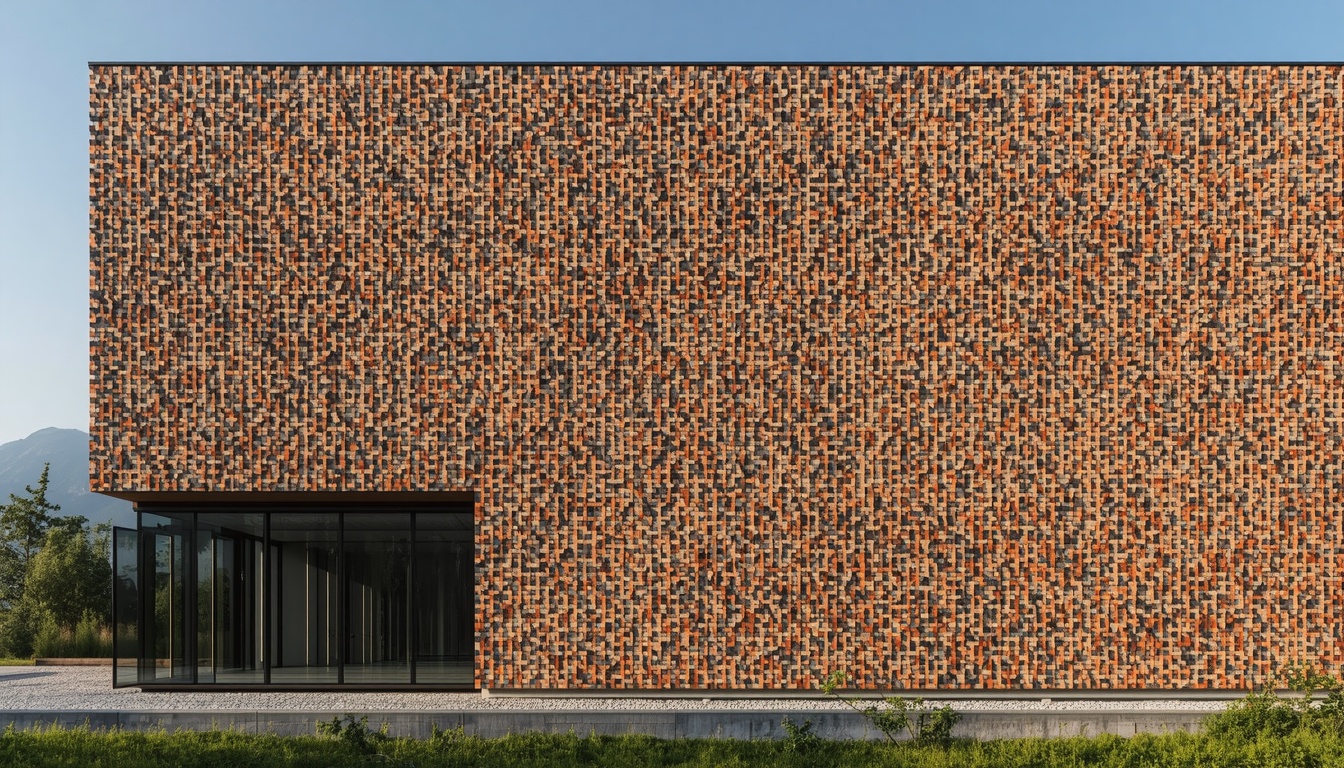
The construction industry faces a critical challenge with waste generation, particularly in specialized manufacturing sectors. Glass Reinforced Concrete (GRC) production, essential for modern architectural facades, inevitably produces offcuts and leftovers during panel fabrication. These remnants have historically been discarded as industrial waste. Austrian facade specialist Rieder has fundamentally challenged this linear approach through the development of scrapcrete—a material born from production leftovers.
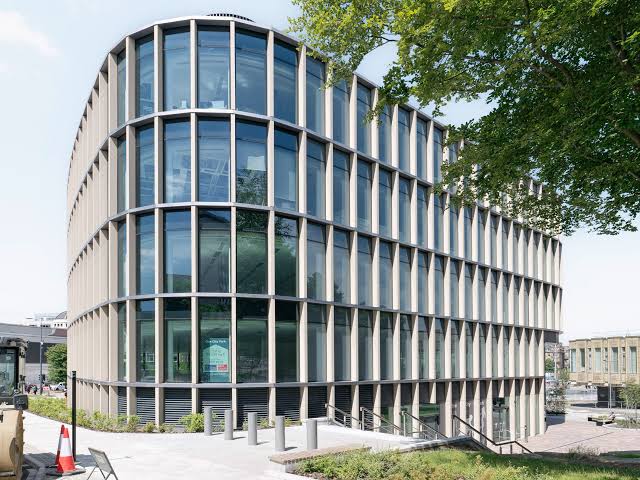
Scrapcrete represents a radical departure from conventional design methodologies. The usual design process begins with an architectural vision, followed by the production of necessary components. Scrapcrete inverts this sequence entirely. The process starts with what already exists—the leftover materials from GRC manufacturing. Under the motto “creating from what you have,” waste reduction becomes inseparable from design innovation.
What makes scrapcrete particularly compelling is its foundation in extensive data analysis. Over one year, Rieder analyzed more than 106,000 individual offcut parts, decoding their areas, boundaries, shapes, colors, and textures. This analysis classified waste materials by size and form, establishing the foundation for a structured design vocabulary rather than random repurposing. The result is a material that significantly reduces waste volume while establishing a high-quality architectural language that fuses sustainability, functionality, and aesthetics.
The Pixel Approach to Facade Design
The data-driven analysis of GRC production leftovers led to a specific product format: a small-format concrete shingle measuring 147 by 240 millimeters, known as the pixel. This dimensions were determined according to the rules of the golden section, ensuring the division ratio of the two sizes creates a harmonious appearance.
The pixel format opens entirely new design possibilities for building envelopes. Because of their small size, these concrete elements offer upcycling options that larger panels cannot provide. The scale allows for nuanced color variation and surface texture that appears vibrant yet homogeneous to the eye. Despite incorporating diverse colors and surfaces from Rieder’s color collection, the small format ensures the facade maintains a calm and uniform appearance.
This approach transforms material scarcity into creative abundance. The proportion of scrapcrete elements can vary according to project requirements, offering maximum resource conservation when projects utilize 100% residual materials. For architects and designers, scrapcrete presents a material that carries an inherent sustainability narrative while delivering aesthetic versatility.
The practical implementation of scrapcrete at Rieder’s headquarters in Maishofen, Austria demonstrates the concept’s viability. The production hall features a scrapcrete facade that establishes a new design language while addressing industrial waste challenges. This application represents the first large-scale demonstration of data-driven generative design techniques applied to GRC production waste.
Generative Design and Digital Fabrication
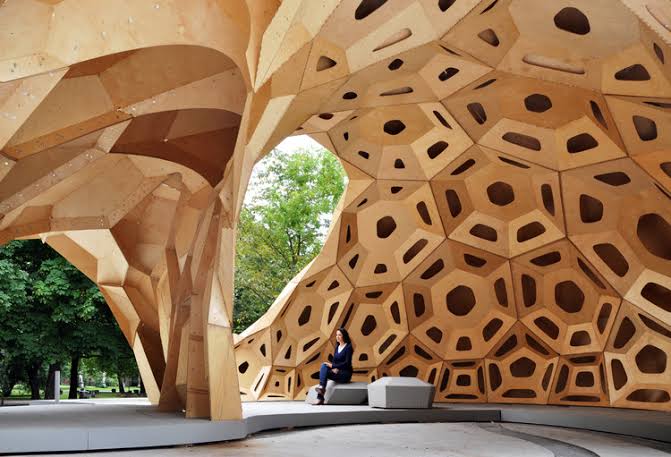
Scrapcrete development emerged from collaboration with design studio Certain Measures, employing data-driven generative design techniques. Generative design algorithms analyzed the available leftover materials and created project-specific facade solutions that give offcuts new life and aesthetic purpose.
This digital approach fundamentally rethinks the design process based on available resources. Rather than designing first and then seeking materials, generative methods begin with material inventory. This inversion of the conventional workflow offers several advantages for sustainable construction.
First, it ensures material utilization is maximized before any new production occurs. Second, it creates inherent design variation since material availability fluctuates with production patterns. Third, it provides a traceable sustainability narrative for building projects—each facade becomes uniquely connected to the manufacturing processes that generated its constituent materials. Fourth, the digital system can optimize placement patterns to achieve visual coherence despite irregular material inputs.
The generative approach also addresses a persistent challenge in facade design: achieving design consistency from irregular material inputs. By classifying over 106,000 offcut parts by size, shape, and color, the digital system establishes parameters that guide the design outcome while accommodating material variability. This balancing of constraint and creativity is central to scrapcrete’s success.
The digital fabrication process ensures precision in material placement. Each pixel element is positioned according to the generative algorithm’s output, creating facades that appear intentional rather than accidental. This precision is essential for architectural applications where aesthetic quality cannot be compromised for sustainability credentials.
Material Properties and Performance Characteristics
Scrapcrete elements retain the fundamental properties of standard GRC panels while offering distinct advantages. The material maintains the characteristic strength-to-weight ratio that makes GRC valuable for facade applications. Glass fiber reinforcement ensures adequate tensile and flexural strength despite the reduced element size.
The small format actually improves certain performance characteristics. Smaller elements experience reduced thermal expansion stresses compared to large-format panels. Joint placement becomes an intentional design element rather than a structural necessity. This allows architects to treat joints as opportunities for shadow play and texture variation.
Weather resistance remains consistent with standard GRC products. The material withstands freeze-thaw cycles, UV exposure, and moisture infiltration without degradation. The pixel format offers additional benefits for maintenance—damaged elements can be replaced individually rather than requiring large panel removal.
Environmental and Economic Implications
The environmental significance of scrapcrete lies in its approach to industrial waste. GRC production, by its nature, generates offcuts and remnants. These materials contain embedded energy from raw material extraction, transportation, and manufacturing processes. Discarding them represents both a resource loss and an environmental burden. Scrapcrete recovers this value by transforming waste into a premium architectural material.
The approach aligns with circular economy principles, where material value is maintained through multiple use cycles. The development of scrapcrete also significantly reduces Rieder’s waste volume while establishing a new cladding material category. For an industry increasingly scrutinized for its environmental footprint, this represents meaningful progress toward sustainable manufacturing.
Economic considerations also favor scrapcrete adoption. Using production waste reduces raw material procurement costs and disposal expenses. The creation of a distinct, premium material category also allows for value capture from what was previously considered waste. This economic viability is essential for sustainability practices to achieve widespread industry adoption.
Future Directions and Industry Potential
Scrapcrete represents not merely a product innovation but a manufacturing philosophy with broader implications. The approach suggests that other construction material production processes could similarly benefit from systematic waste analysis and generative design applications. The methodology of classifying and cataloging material leftovers could extend to various manufacturing contexts.
The potential for expanding scrapcrete applications beyond facade cladding remains unexplored. Interior applications, furniture design, and landscape architecture could similarly benefit from small-format GRC elements derived from production waste. The pixel format’s aesthetic flexibility opens possibilities for custom patterns, gradient effects, and integrated lighting solutions.

Emma Clarke is an architect with a background in building materials and facade engineering. She has worked on GRC projects in various climates and specializes in material performance and restoration.