
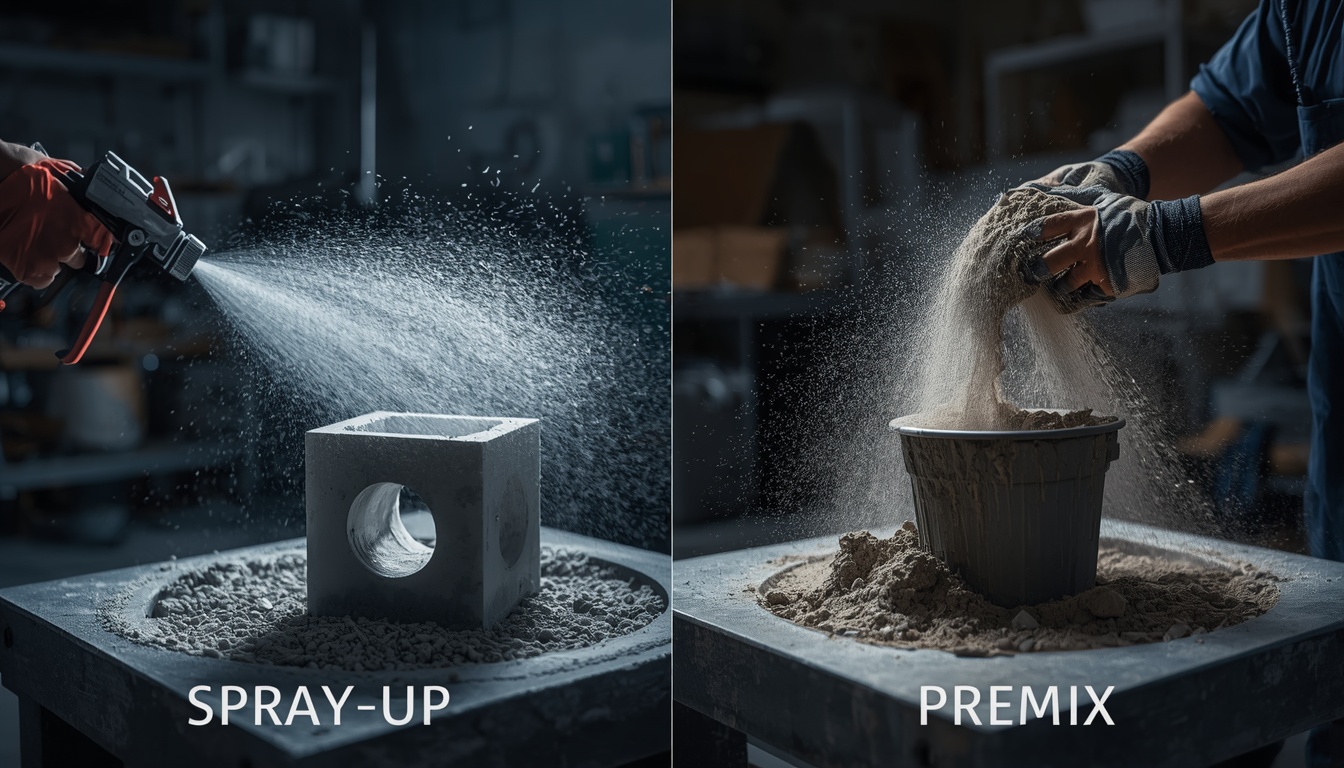
Walk into any Glass Reinforced Concrete workshop and you will hear the same argument. Spray-up or premix? Which one makes a stronger panel? The answer is not as simple as picking a side. Both methods produce panels that pass the same tests. Both are used on real projects around the world. The difference shows up in how the panel is made, how much fiber goes into it, and what it is expected to do.
Spray-up and premix are not two versions of the same recipe. They are two different processes with different limits. Spray-up can handle high fiber content because the fibers are added at the gun, not in the mixer. Premix is limited because too much fiber makes the mix stiff and unworkable. That single fact drives most of the strength difference between the two.
But strength is not the only thing that matters. A panel that is hard to cast, slow to produce, or expensive to finish is not the right choice, even if it tests higher. Premix wins on speed and shape. Spray-up wins on fiber content and flexural performance. The right method depends on the panel, the project, and the finish.
Mixing is where the two methods split. The recipe, the tools, and the order of ingredients all change depending on which process is used. If the mix is wrong, neither method will save the panel. This guide on how to mix glass reinforced concrete covers the ratios and tools in detail. Here, the focus is on what those differences mean for panel strength.
This article compares spray-up and premix across fiber content, fiber orientation, flexural strength, impact resistance, durability, finish, cost, and production speed. It also looks at when each method wins and the mistakes that ruin panels in both.
What Is Spray-Up GFRC?
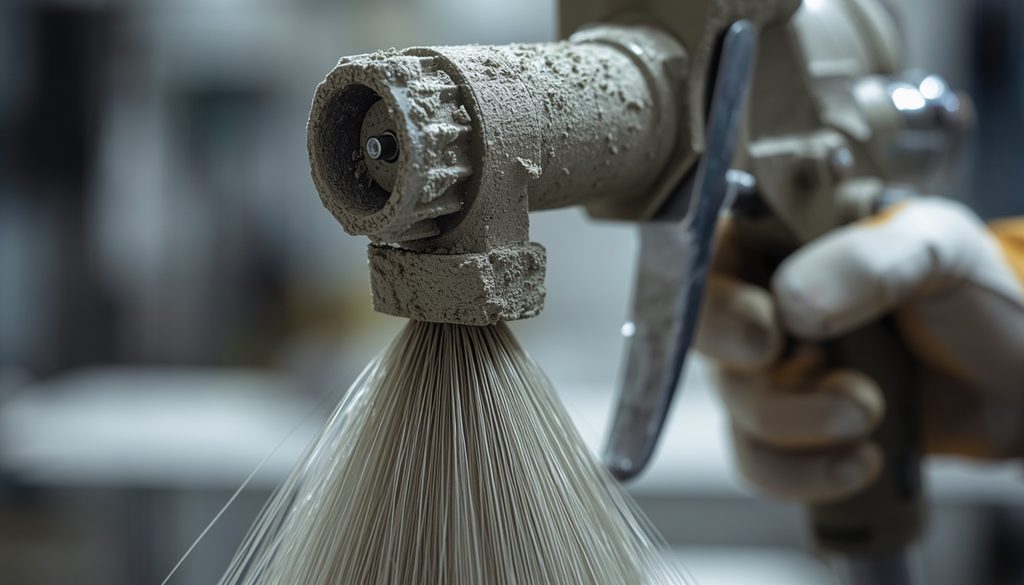
Spray-up is the original GFRC production method. It was developed in the 1970s and is still the standard for high-strength panels today. The process is simple in principle: cement slurry and glass fibers meet at the spray gun and land in the mold together.
How the spray-up process works
A pump moves the cement slurry from a mixer to the spray gun. At the gun, a chopper cuts continuous glass fiber roving into short strands, usually 12–25 mm long. The slurry and the chopped fibers are sprayed into the mold at the same time. The operator builds up layers until the required thickness is reached.
Because the fibers are added at the gun, they never pass through the mixer. That means the mix can stay smooth and pumpable while the fiber content stays high. There is no risk of fiber balling in the tank. The fibers land in the mold in a random, two-dimensional orientation, which gives the panel strength in all directions.
After spraying, the panel is compacted with a roller to remove air pockets and consolidate the mix. Then it cures.
Fiber content and orientation
Spray-up panels typically contain 4–6% AR glass fibers by weight. That is roughly double what premix can handle. The higher fiber content is the main reason spray-up panels test higher in flexural strength.
The fibers land in a random pattern, but they tend to lie flat against the mold surface. This is called two-dimensional orientation. It gives good in-plane strength, which is what a panel needs. The fibers do not align in one direction, so the panel performs evenly across its surface.
Where spray-up is used
Spray-up is used for thin architectural panels, facades, cladding, and any element that needs high flexural strength. It is also common for complex shapes where the mold has deep relief or undercuts.
The process is slower than premix. It needs a skilled operator, a pump, and a spray gun. It is not practical for small decorative pieces or short production runs. But for large panels and high-performance applications, it is the method of choice.
What Is Premix GFRC?
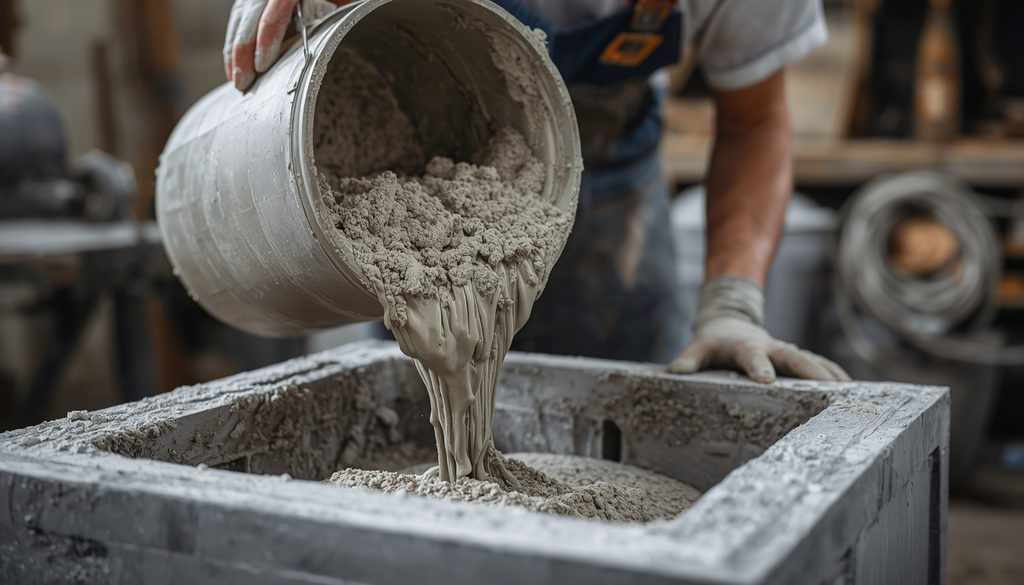
Premix is the simpler of the two methods. The fibers go into the mixer with the rest of the ingredients. The whole mix is then poured or pumped into the mold. No spray gun, no chopper, no separate fiber feed. That simplicity is both its strength and its limit.
How the premix process works
Cement, sand, water, and admixtures are mixed first until the paste is smooth. Then the glass fibers are added slowly, with the mixer running at low speed. The fibers are short—usually 6–12 mm—so they can blend into the mix without tangling. Mixing continues for one to two minutes. Any longer and the fibers break down. Any shorter and dry pockets remain.
The wet mix is then poured or pumped into the mold. It can be vibrated or tamped to fill corners and remove air. The panel cures in the mold before being stripped.
There is no compaction roller, no spray operator, and no pump pressure to manage. A small workshop with a pan mixer and basic molds can produce premix panels.
Fiber content and mixing
Premix fiber content is limited to 2–3.5% by weight. Above that, the mix becomes stiff and unworkable. The fibers clump together, and the concrete does not flow into detailed molds. That limit is the main reason premix panels test lower in flexural strength than spray-up panels.
The fibers are distributed evenly through the mix, but they are not oriented in any particular direction. They sit in three-dimensional random orientation. In theory, that should give strength in all directions. In practice, the low fiber content means there are fewer fibers crossing any given crack.
Where premix is used
Premix is used for small decorative elements, complex shapes, and short production runs. It is common for planters, benches, moldings, and interior features where the strength requirement is lower and the shape is more important than the flexural number.
It is also used when the panel is thick. A thick panel does not need high fiber content to carry load. The section itself provides the strength. Premix fills that role well.
The Core Difference: Fiber Content
Everything about spray-up and premix comes down to one number: how much glass fiber goes into the mix. That number decides the strength, the workability, and the cost of the panel. It also explains why the two methods are not interchangeable.
Spray-up fiber ratios
Spray-up panels carry 4–6% AR glass fibers by weight. Some high-performance mixes push toward 6%. That level is possible because the fibers never touch the mixer. They are chopped at the gun and land on the mold with the slurry. The mix itself stays smooth, so the pump keeps running.
Higher fiber content means more fibers crossing every crack. More fibers means more load carried after the matrix cracks. That is why spray-up panels show higher flexural strength and better post-crack performance.
Premix fiber limits
Premix tops out around 2–3.5% fiber by weight. Push past that and the mix turns stiff. Fibers tangle into balls. The concrete stops flowing into corners and details. The panel comes out with weak spots, not strong ones.
The limit is not a rule someone made up. It is a physical constraint of mixing fibers into a wet paste. The mixer can only fold in so much before the mix stops behaving like a liquid.
Why the numbers matter
The gap between 6% and 3% is not small. It roughly doubles the amount of reinforcement in the panel. That shows up in flexural strength, impact resistance, and the ability to carry load after the first crack.
But fiber content is not everything. A thick premix panel can still carry heavy loads because of its section. A thin spray-up panel can fail if the fibers are not spread evenly. The number matters, but so does how the panel is used.
Fiber length in each method
Spray-up uses longer fibers, 12–25 mm. Premix uses shorter fibers, 6–12 mm. Longer fibers bridge cracks more effectively. Shorter fibers mix more easily but pull out sooner. That is another reason spray-up panels outperform premix panels in flexural tests.
Fiber Orientation and Distribution
Fiber content tells you how much glass is in the panel. Fiber orientation tells you where it sits and which way it points. Two panels with the same fiber content can behave very differently if the fibers are arranged differently.
Random vs. directed fibers
In spray-up, the fibers land in a random pattern. They are chopped at the gun and hit the mold from different angles. Most of them end up lying flat against the surface. That gives the panel what is called two-dimensional random orientation. The fibers spread in all directions across the plane of the panel.
In premix, the fibers are stirred into the wet mix. They end up pointing in every direction, including into the depth of the panel. That is three-dimensional random orientation. The fibers are evenly spread, but they are not concentrated near the surface where bending stress is highest.
How fibers sit in each method
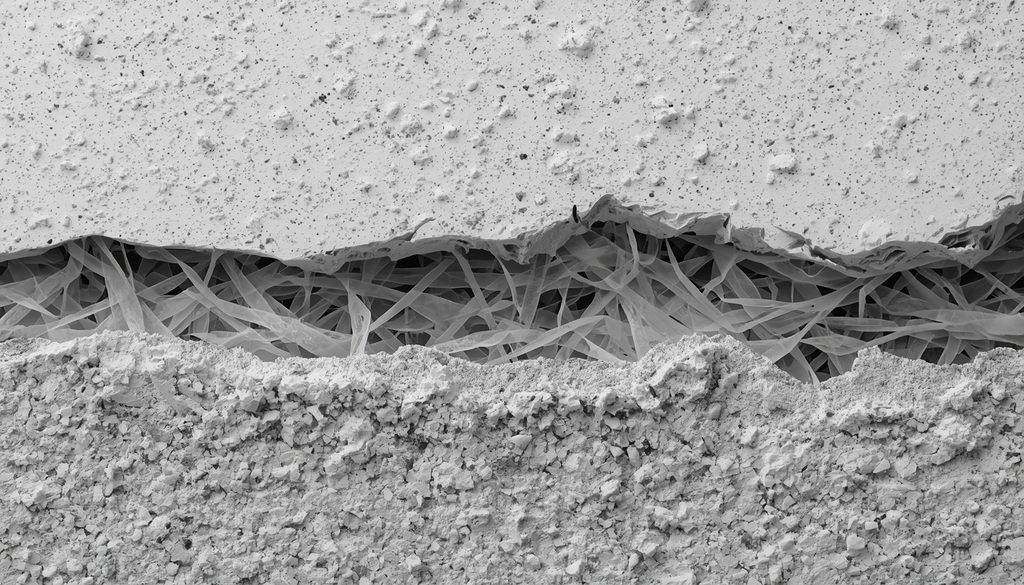
In a spray-up panel, the fibers are packed closer together. They overlap and interlock. When a crack starts, it hits a fiber almost immediately. The fiber holds the crack closed and forces it to find another path. That is why spray-up panels carry load after cracking.
In a premix panel, the fibers are spread thinner. There are fewer of them crossing any given crack. The crack may run between fibers instead of being stopped by them. The panel still holds together, but it does not carry as much load after the first crack.
Effect on crack bridging
Crack bridging is the main job of the fibers. A crack forms in the cement matrix, and a fiber spans across it, holding the two sides together. The more fibers that cross the crack, the more load the panel carries.
Spray-up wins here. Higher fiber content plus surface-concentrated orientation means more fibers in the zone where bending stress is highest. Premix fibers are spread through the full thickness, so fewer of them sit where they are needed most.
This is why a thin spray-up panel can outperform a thicker premix panel of the same weight. The fibers are in the right place.

Emma Clarke is an architect with a background in building materials and facade engineering. She has worked on GRC projects in various climates and specializes in material performance and restoration.