
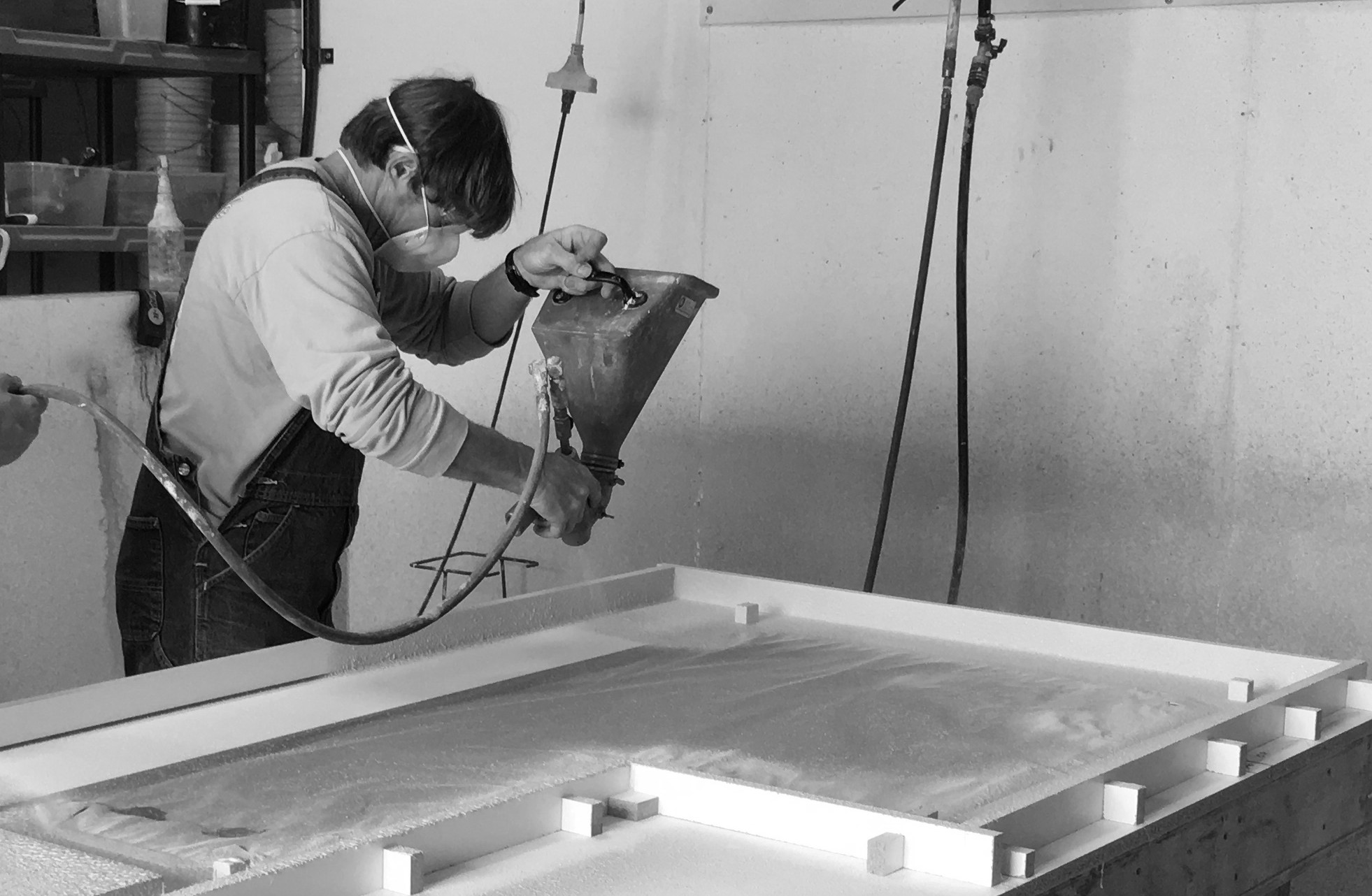
Glass Reinforced Concrete comes out of the mold with a raw surface. It looks grey, slightly porous, and unfinished. What happens next decides how it performs and how it looks for the rest of its life.
Some Glass Reinforced Concrete gets painted. Some gets a gel coat. Some is sandblasted, acid-etched, or left to show its natural texture. Each choice changes how the material handles sun, rain, frost, and wear. Pick the wrong one and the surface peels, fades, or traps moisture. Pick the right one and the GRC stays sharp for decades.
This article covers the main surface finishes used on GRC: paint systems, gel coats, textured finishes, integral pigments, and sealers. It also explains how to prepare the surface, how to choose the right finish for outdoor exposure, and how to repair damage when it happens.
Why Surface Finish Matters for Glass Reinforced Concrete
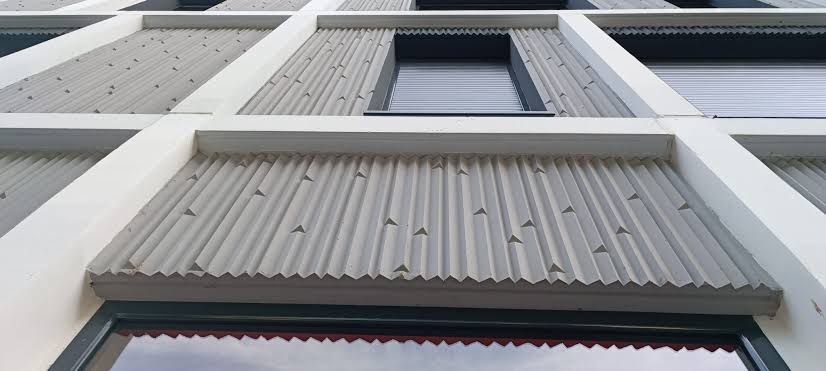
A GRC panel straight out of the mold is not a finished product. The surface is raw, slightly porous, and vulnerable. Without a finish, it will absorb water, stain easily, and wear down faster than it should.
The finish is not just about looks. It is the first line of defense. It keeps moisture out of the concrete and away from the glass fibers inside. It blocks UV light that breaks down the binder over time. It resists dirt, pollution, and salt. And it decides whether the GRC looks like polished stone, raw concrete, or something else entirely.
There is also a practical side. A good finish reduces maintenance. A bad one creates it. Paint that peels, gel coat that cracks, or sealer that traps moisture will cost more in repairs than the original finish cost to apply.
GRC is used outdoors, indoors, in water features, on facades, and underfoot. Each setting puts different demands on the surface. A finish that works on a sheltered interior wall will fail on a coastal facade. A sealer that protects a planter will not protect a fountain.
That is why surface finish is not an afterthought. It is part of the design. Choose it based on where the GRC will live, what it will touch, and how long it needs to last.
How Glass Reinforced Concrete Surfaces Are Prepared Before Coating
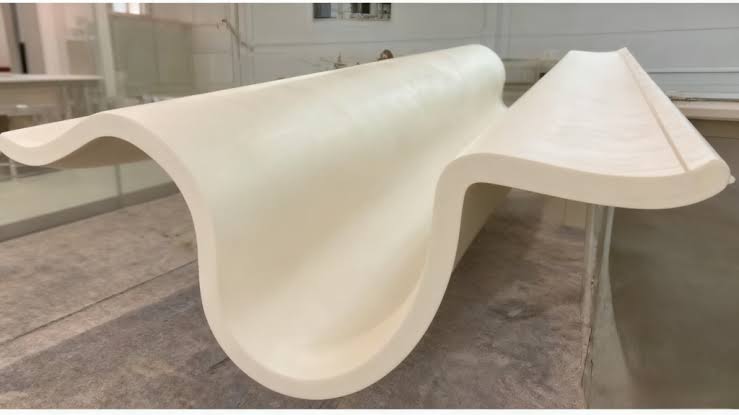
No coating sticks to a dirty surface. That sounds obvious, but it is where most finish failures start. Dust, oil, mold release agents, and loose particles all sit between the GRC and whatever you apply on top. The coating bonds to the dirt, not the concrete. A few months later, it peels.
Preparation starts the moment the piece leaves the mold. Mold release agents have to be removed. Some are water-soluble and wash off with water. Others are oil-based and need a solvent or a light sanding. If they stay on the surface, nothing will bond properly.
Next comes inspection. Small voids, air bubbles, and surface defects are common in GRC. They need to be filled with patching compound before any finish goes on. If you paint over a void, the paint bridges it. The bridge breaks. The void stays.
After filling, the surface is sanded. This does two things. It levels the patched areas and it opens the surface of the concrete. An open surface gives the coating something to grip. A polished or slick surface does not.
Dust from sanding has to be removed completely. A damp cloth, a soft brush, or compressed air works. Any dust left behind becomes a weak layer under the finish.
Moisture is the last check. GRC has to be dry before coating. How dry depends on the coating. Solvent-based and gel coat systems can tolerate a little moisture. Water-based paints and sealers need a drier surface. In cold or humid weather, drying takes longer. Rushing it causes blistering and poor adhesion.
Once the surface is clean, filled, sanded, and dry, it is ready. Everything after this step depends on this one being done right.
Paint Systems for GFRC
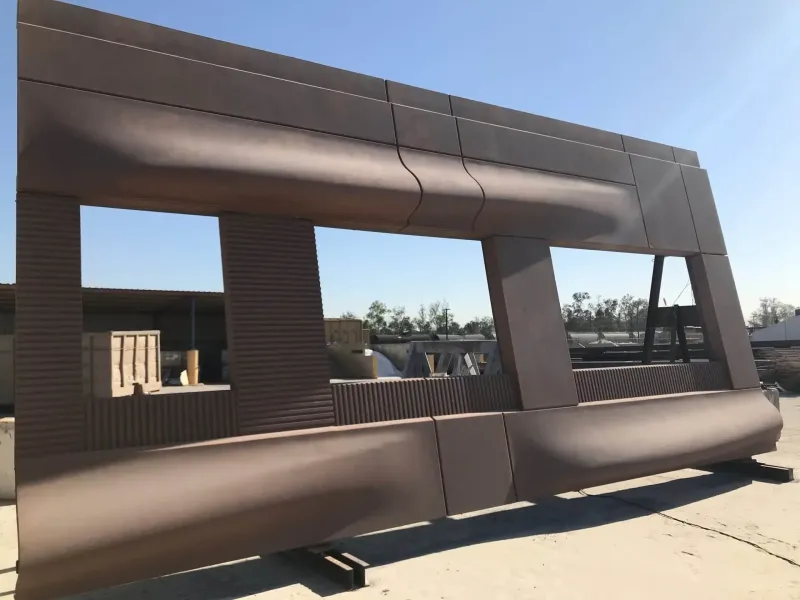
Paint is the most common finish for Glass Reinforced Concrete surface . It is cheap, easy to apply, and comes in any color. But not all paint is the same. The wrong one traps moisture inside the concrete and causes cracks, peeling, or blistering. The right one protects the surface and lasts for years.
There are three main paint systems used on GRC.
Acrylic paints are water-based and breathable. They let moisture escape from the concrete instead of trapping it inside. That matters outdoors, where moisture trapped under a non-breathable coating expands when it freezes and pushes the paint off. Acrylics are easy to apply, dry fast, and come in a wide range of colors. They are a good choice for sheltered exteriors and most interior work.
Elastomeric coatings are thicker and more flexible than standard acrylics. They stretch and move with the GRC instead of cracking when the surface shifts. They bridge small cracks that form over time. They are common on exterior facades, where temperature changes cause movement. Elastomeric coatings cost more than acrylics but last longer and need less maintenance.
Cement-based paints bond chemically with the GRC surface. They do not form a film the way acrylics and elastomers do. Instead, they become part of the concrete. This makes them very durable and almost impossible to peel. They give a mineral, matte look that suits raw concrete and natural stone designs. The trade-off is a limited color range and a rougher texture than film-forming paints.
The choice depends on where the GRC will be and what it needs to do. For high-movement exteriors, elastomeric. For a natural look, cement-based. For general use at low cost, acrylic.
One more thing matters: surface preparation. Even the best paint fails on a dusty, oily, or damp surface. Clean it, fill it, sand it, and let it dry before painting.
Gel Coat Finishes
Gel coat is different from paint. Paint sits on top of the GRC. Gel coat becomes the surface of the GRC. It is sprayed into the mold before the concrete mix is poured or sprayed in. When the piece comes out, the gel coat is already there, bonded to the concrete at a chemical level.
That difference matters. Paint can peel because it is a separate layer. Gel coat cannot peel because it is not a layer. It is the outer skin of the material itself.
There are two main types of gel coat used on GRC.
Polyester gel coats are the standard choice. They are durable, UV-resistant, and available in almost any color. They give a smooth, glossy finish that looks like polished stone or ceramic. They work well for architectural panels, decorative elements, and any piece that needs a factory-quality surface. Polyester gel coats are also easy to repair. A scratch or chip can be filled with matching gel coat, sanded, and polished until it disappears.
Epoxy gel coats are tougher and more resistant to chemicals. They cost more and are harder to apply. They are used in industrial settings, marine environments, and anywhere the surface will be exposed to harsh substances. Epoxy gel coats are less UV-stable than polyester, so they need a topcoat in direct sunlight.
Gel coat is the right choice when you want a finish that lasts without repainting. It is also the right choice when the surface needs to be smooth, glossy, or highly uniform. It is not the right choice when the GRC needs to breathe. Gel coat seals the surface completely. If moisture gets behind it, it has nowhere to go. That is why gel-coated GRC is usually cast in controlled conditions and installed where water cannot penetrate from behind.
Gel coat also adds cost. It requires a mold, careful application, and controlled curing. For small runs or simple shapes, paint is cheaper. For large runs or complex shapes, gel coat pays for itself in durability and appearance.
Textured and Etched Finishes
Not every GFRC surface needs paint or gel coat. Sometimes the goal is texture, not color. A rough, stone-like surface can look better than a smooth one. It hides small imperfections, resists showing scratches, and blends into natural surroundings.
There are three common ways to create texture on GRC.
Sandblasting is the most direct method. A high-pressure stream of sand or grit is blasted across the cured surface. It removes the top layer of cement paste and exposes the aggregate and glass fibers underneath. The result is a rough, granular surface that looks like natural stone. The depth and coarseness depend on the pressure, the grit size, and how long the blaster stays in one spot. Light blasting gives a subtle texture. Heavy blasting gives a deep, rugged finish.
Acid etching uses a mild acid wash to eat away the surface layer. The acid reacts with the cement paste and leaves the aggregate exposed. The result is a mottled, aged look that works well for historic restoration and natural landscapes. Acid etching is less aggressive than sandblasting. It gives a softer, more uniform texture. It also requires careful handling because the acid is hazardous.
Stone and wood effects come from the mold itself. A rubber mold with a stone texture transfers that texture to the GRC during casting. No surface treatment needed. The mold can replicate limestone, sandstone, slate, wood grain, tree bark, or almost any natural surface. This method gives the most control over the final look. It also allows complex shapes and deep relief that sandblasting and etching cannot achieve.
Textured finishes are not just about appearance. They improve grip on steps and pavers. They hide dirt and wear better than smooth surfaces. They reduce glare in bright sunlight. And they can make a new GRC element look like it has been there for decades.
One thing to remember: textured surfaces hold dirt more than smooth ones. They need cleaning more often. A penetrating sealer helps keep them looking fresh.

Emma Clarke is an architect with a background in building materials and facade engineering. She has worked on GRC projects in various climates and specializes in material performance and restoration.