

Landscape architects work with stone, concrete, wood, metal, and glass. Each has its place. But when a project needs something light, durable, and easy to shape, GFRC landscape often wins.
Glass Fiber Reinforced Concrete is not new. It has been used in facades and decorative panels for decades. In landscape design, it shows up in planters, benches, steps, water features, and sculptures.
Why does it fit outdoor spaces so well? Outdoor environments are harsh. Sun, rain, frost, salt, and foot traffic wear materials down. Concrete cracks. Wood rots. Metal rusts. GFRC does not. It resists moisture, holds its shape through freeze-thaw cycles, and weighs far less than solid concrete.
That weight difference matters. A large concrete planter can weigh hundreds of kilograms. A GFRC planter looks the same but can be lifted by hand. It can go on rooftops and bridges where heavy loads are not an option.
Design freedom is the other reason. GFRC can be molded into curves, textures, and fine details that cast stone or precast concrete cannot match. It mimics natural stone, aged wood, or smooth modern surfaces.
This article covers how GFRC is used in landscape architecture—planters, benches, hardscaping, water features, sculptures, and more. It also looks at how it compares to other materials, how it is installed, and what maintenance it needs.
What Makes GFRC Different from Traditional Landscape Materials?
GFRC is not just another version of concrete. It behaves differently, weighs differently, and ages differently. That is why it keeps replacing materials that have been used in landscapes for centuries.
Weight
This is the biggest difference. Traditional concrete and cast stone are heavy. A cubic meter of concrete weighs around 2,400 kg. GFRC weighs roughly 1,800 to 2,000 kg per cubic meter, and because it can be made much thinner, the final product is often 70–80% lighter than solid concrete. A GFRC planter that looks like cast stone can be lifted by two people. The same planter in concrete needs a crane.
Thickness
GFRC panels and shells can be as thin as 10–15 mm. Traditional concrete needs far more thickness to hold together. That thin profile opens up design options that precast concrete cannot match.
Tensile Strength
Concrete is strong in compression but weak in tension. That is why it cracks. GFRC uses alkali-resistant glass fibers to carry tensile loads. The result is a material that bends instead of breaking. Cast stone and precast concrete do not have that flexibility.
Design Flexibility
GFRC is cast in molds, often by spraying. It can take on curves, undercuts, fine textures, and sharp details. Cast stone is limited by its weight and brittleness. Precast concrete needs thicker sections. GFRC can do things both cannot.
Weather Resistance
Traditional concrete absorbs water and cracks during freeze-thaw cycles. Cast stone erodes over time. GFRC resists moisture, salt, and frost. It does not rust like steel-reinforced concrete, because there is no steel inside to rust.
Surface Finish
GFRC landscape can be finished in many ways—smooth, textured, sandblasted, acid-etched, or coated. It can mimic limestone, granite, sandstone, or aged wood. Cast stone has a more limited finish range. Precast concrete often looks like, well, concrete.
Repair and Maintenance
Small cracks in GFRC can be filled and refinished. Damaged cast stone often needs replacement. Precast concrete repairs are visible and rarely blend in.
Cost
GFRC is not always cheaper upfront. Molds and labor cost money. But for complex shapes, thin panels, and lightweight installations, it often costs less than cast stone or precast concrete once transportation, lifting, and structural support are factored in.
GFRC Planters: Lightweight, Durable, and Customizable
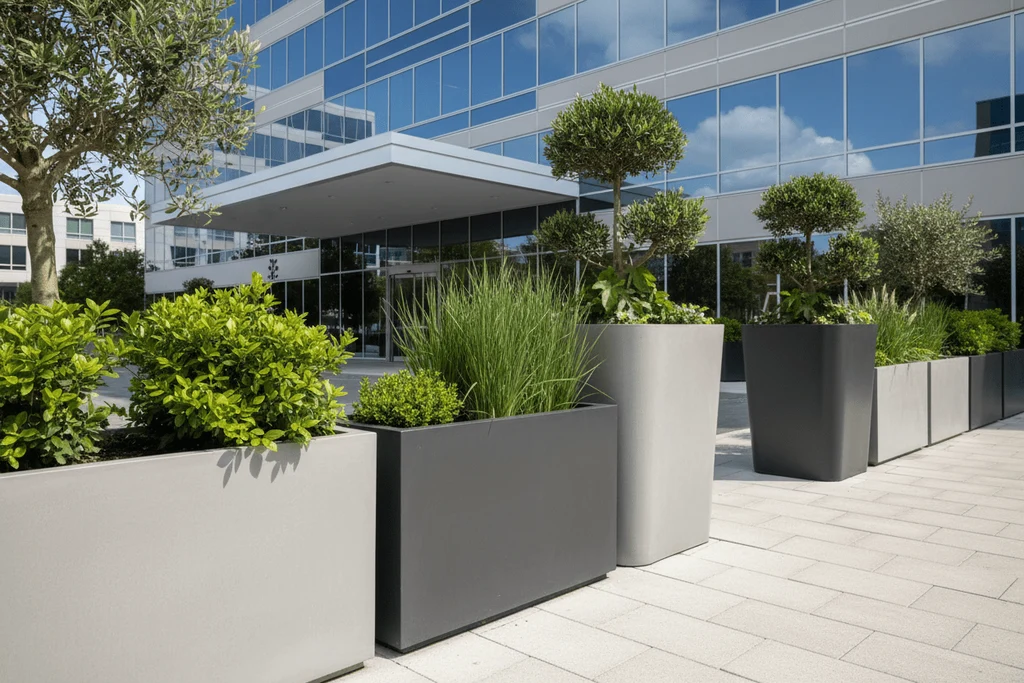
Planters are one of the most common uses of GFRC in landscape design. They look like concrete or cast stone, but they behave very differently.
Why GFRC beats concrete and fiberglass planters
Concrete planters are heavy. A large one can weigh over 300 kg. Moving it needs equipment. Fiberglass planters are light but fade, crack under UV, and feel hollow. GFRC sits in the middle. It looks like stone, resists weather, and stays light enough to lift by hand.
Shapes, sizes, and finishes
GFRC planters come in almost any form. Round, square, curved, tapered, ribbed. Finishes range from smooth and modern to rough and natural. Acid-etched looks like limestone. Sandblasted gives a matte stone texture. Polished looks almost like marble. Custom molds are common. If a project needs a specific shape, GFRC can deliver it.
Drainage and root protection considerations
Good planters need good drainage. GFRC can be cast with built-in drainage holes, raised feet, or hidden reservoirs. Some designs include self-watering systems. Unlike thin fiberglass, GFRC does not crack under root pressure. It holds its shape when roots grow and soil expands.
GFRC Benches and Seating Elements
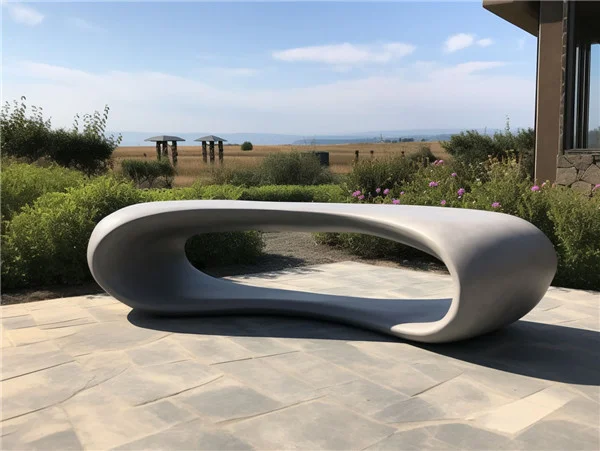
Benches look simple. A flat surface, some legs, maybe a backrest. But outdoor seating has to survive weather, heavy use, and sometimes vandalism.
Structural performance under load
A park bench may hold two people or ten. GFRC benches are cast as a single piece or assembled from thick panels. The glass fibers carry tensile stress, so the bench does not crack when weight shifts or when someone stands on the backrest. Unlike cast stone, GFRC bends slightly under load instead of snapping.
Outdoor durability and comfort
Wood splinters and rots. Metal gets hot in summer and cold in winter. Concrete is heavy and uncomfortable. GFRC can be finished with a smooth or lightly textured surface that does not get too hot or too cold. It does not absorb water, so it does not crack in frost. It keeps its color for decades.
Custom designs for parks and public spaces
GFRC benches can be curved, angular, modular, or sculptural. They can be cast with integrated planters, lighting channels, or armrests. For public spaces, they can be designed with anti-skate edges or hidden anchoring. For parks, they can mimic natural stone or wood without the maintenance those materials require.
GFRC in Hardscaping: Pavers, Steps, and Retaining Walls
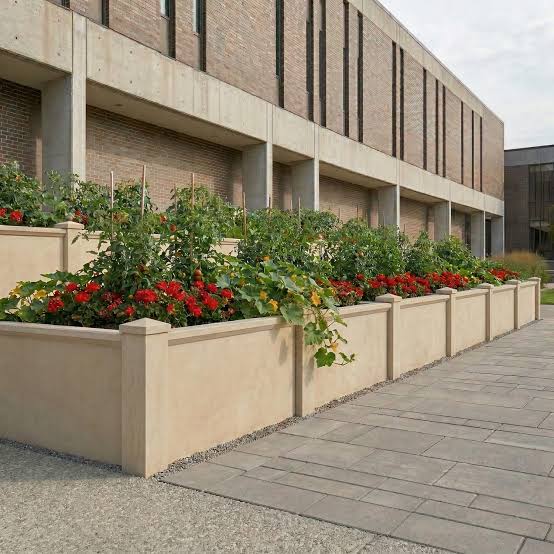
Hardscaping is where GFRC shows its structural side. Thin profiles, sharp edges, and load-bearing capacity make it a strong alternative to traditional stone and concrete.
Thin-profile pavers and tiles
GFRC pavers can be as thin as 15–20 mm. Traditional concrete pavers are 40–60 mm. That difference matters on rooftops, balconies, and raised terraces where every kilogram counts. GFRC pavers can mimic granite, limestone, or slate without the weight of real stone. They can be installed on sand, mortar, or raised pedestal systems.
Steps and stair treads
Outdoor steps take heavy traffic and constant weather exposure. GFRC stair treads are cast with integrated nosing and anti-slip textures. They resist chipping and cracking better than concrete. Because they are lighter, they can be installed on existing structures without adding significant load. They can also be curved or shaped in ways precast concrete cannot.
Decorative retaining wall panels
Retaining walls hold soil back and manage grade changes. GFRC panels can be thin, textured, and lightweight. They can mimic stacked stone, brick, or board-formed concrete. Because they are light, they can be installed on slopes or in tight spaces where heavy equipment cannot reach. And because they do not rust, they last longer than steel-reinforced concrete in wet conditions.

Emma Clarke is an architect with a background in building materials and facade engineering. She has worked on GRC projects in various climates and specializes in material performance and restoration.