The durability of Glass Reinforced Concrete is decided long before the first panel leaves the mold. It is decided by the chemistry of the glass fibers inside the mix, and at the center of that chemistry sits zirconium oxide (ZrO₂). When cement meets water, it creates a highly alkaline environment with a pH between 12 and 13. This environment attacks ordinary glass fibers, dissolving their silica network, thinning the strands, and stripping away their load-carrying capacity over time. Zirconium changes that outcome. By embedding itself into the glass network, zirconium blocks alkali ions from penetrating the fiber and forms an invisible shield that keeps Glass Reinforced Concrete resistant to cracking for decades.
The effect of zirconium is not limited to chemical resistance. As the zirconium content rises, the fiber’s tensile strength, elongation at break, and bond with the cement matrix all shift as well. These changes determine how many years a Glass Reinforced Concrete panel can withstand weathering, whether it will crack in a coastal climate, and whether it can carry the loads assumed in the design. A mix that performs well in the workshop can still fail on a façade if the zirconium level is too low for the exposure it faces.
This is why zirconium content should never be treated as a hidden production detail. It belongs in the specification, it belongs on the test report, and it should be confirmed through independent strength testing rather than trusting a surface that merely looks flawless. A Glass Reinforced Concrete panel can appear perfect on delivery and still turn brittle within a few years if the fiber chemistry was compromised. Understanding zirconium is therefore the first step toward judging real durability, not assumed durability. The sections below examine the specific zirconium content ranges, the science behind alkali resistance, and the standards that define acceptable limits for Glass Reinforced Concrete.
What Is Zirconium and Why Does It Matter in Glass Reinforced Concrete?
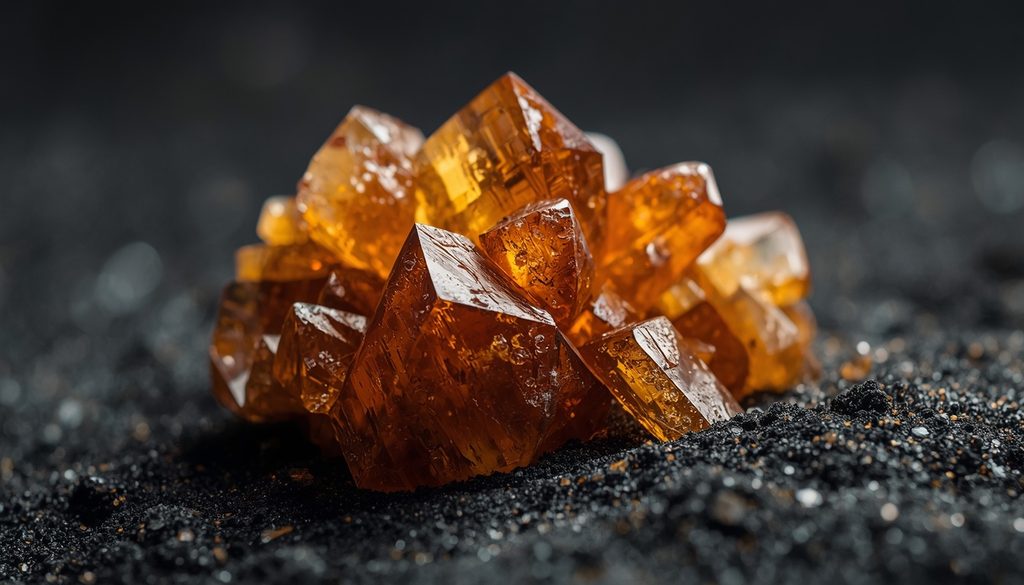
Zirconium is a metallic element with the symbol Zr and atomic number 40. In its oxide form, zirconium dioxide (ZrO₂), also known as zirconia, it becomes one of the most valuable ingredients in the production of alkali-resistant glass fibers. Without zirconium, modern Glass Reinforced Concrete as we know it would not exist. The material would lose its tensile strength within a few years, and thin façade panels would become brittle and unsafe.
Zirconium in Its Natural Form
Zirconium is not found in pure metallic form in nature. It is extracted primarily from zircon (ZrSiO₄), a mineral found in beach sands across Australia, South Africa, and the United States. Zircon has been used for centuries in ceramics, refractories, and foundry sands. Its resistance to heat and chemical attack made it valuable long before anyone thought to use it in concrete. When zircon is processed, it yields zirconium oxide, the white powder that glass manufacturers add to their melt.
Why Ordinary Glass Fibers Fail in Cement
To understand why zirconium matters, you first need to understand what happens to ordinary glass inside Glass Reinforced Concrete. Cement, when mixed with water, does not simply harden. It creates a strongly alkaline environment. The pore solution inside curing cement reaches a pH of 12 to 13, sometimes higher. This is roughly the same alkalinity as household bleach.
Silica-based glass does not survive well in this environment. The hydroxide ions (OH⁻) in the pore solution attack the silica network (SiO₂) that gives glass its structure. Over months and years, this attack dissolves the glass from the surface inward. The fibers become thinner, weaker, and eventually lose their ability to bridge cracks. A Glass Reinforced Concrete panel reinforced with ordinary E-glass fibers may lose most of its tensile strength within five to ten years.
The Role of Zirconium in Fiber Chemistry
Zirconium changes this story. When zirconium oxide is added to the glass melt, zirconium atoms become part of the glass network itself. They replace some of the silica and calcium ions, creating a more chemically stable structure. This modified network resists the attack of hydroxide ions far better than ordinary glass.
The reason is partly chemical and partly physical. Chemically, zirconium forms stronger bonds with oxygen than silica does, making the network harder to break apart. Physically, zirconium atoms are larger and disrupt the uniform channels through which alkali ions would otherwise travel. The result is a fiber that can sit inside alkaline cement for decades without significant loss of strength.
Why This Matters for Glass Reinforced Concrete
Glass Reinforced Concrete is used in thin sections, often only 10 to 15 millimeters thick. In these thin panels, the glass fibers carry nearly all the tensile load. If the fibers degrade, the panel has nothing left to resist bending. Wind loads, thermal movement, and handling stresses will crack it. This is why the durability of Glass Reinforced Concrete depends so heavily on the durability of its fibers, and why the durability of its fibers depends on zirconium.
A Glass Reinforced Concrete mix with the right zirconium content can last fifty years or more in exterior applications. The same mix with low-zirconium fibers may show surface cracking within a decade. The difference is not in the cement, the sand, or the production method. It is in the chemistry of the fiber, and at the heart of that chemistry is zirconium.
Zirconium as the Invisible Guarantee
Zirconium is invisible in the finished panel. You cannot see it, touch it, or measure it on site without laboratory equipment. Yet it is the single most important factor in determining whether a Glass Reinforced Concrete element will still be intact after decades of weathering. This is why zirconium content belongs in every specification, every test report, and every quality control document. It is the invisible guarantee behind every durability claim made for Glass Reinforced Concrete.
The Alkaline Environment Inside Glass Reinforced Concrete
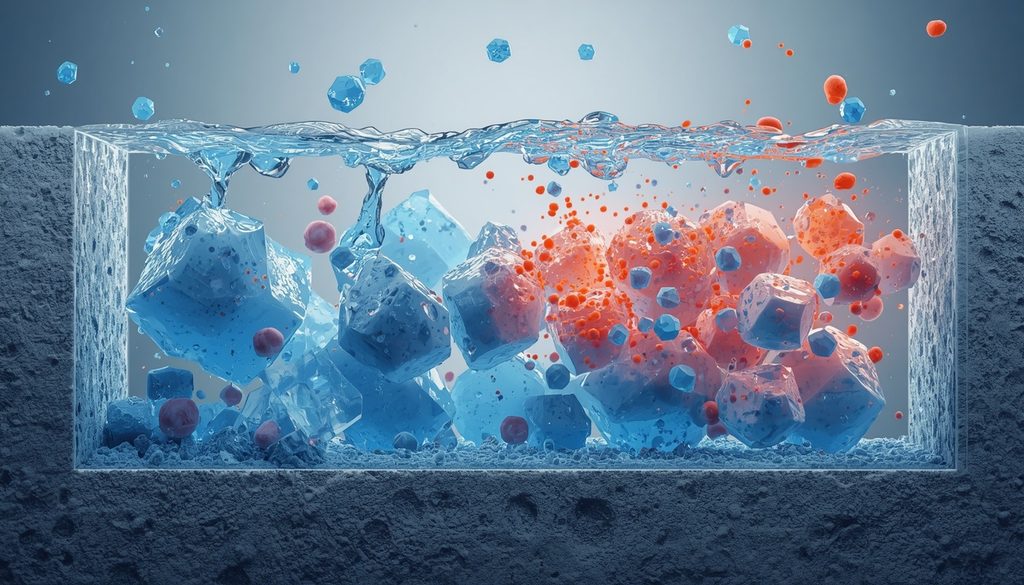
Every Glass Reinforced Concrete element contains a hidden chemical environment that decides the fate of its fibers. This environment is created the moment cement meets water. It is invisible, it is aggressive, and it never stops working. Understanding it is the key to understanding why zirconium is not optional.
How Cement Creates Alkalinity
Portland cement is not simply a powder that dries and hardens. It is a mixture of reactive compounds, mainly tricalcium silicate (C₃S), dicalcium silicate (C₂S), tricalcium aluminate (C₃A), and tetracalcium aluminoferrite (C₄AF). When water is added, these compounds react in a process called hydration. They form new minerals: calcium silicate hydrate (C-S-H), calcium hydroxide (CH), and various aluminates.
Calcium hydroxide, also known as portlandite, is the source of the problem. It is highly soluble and releases hydroxide ions (OH⁻) into the pore water. As hydration continues, the concentration of these ions rises. Within hours, the pore solution reaches a pH of 12.5. Within days, it can climb to 13 or higher. This is one of the most alkaline environments found in any industrial material.
What This Alkalinity Does to Glass
Ordinary silica-based glass is not designed to survive in this environment. Glass is a network of silicon and oxygen atoms held together by strong covalent bonds. In neutral water, this network is stable. In alkaline water, hydroxide ions attack it directly. They break the silicon-oxygen bonds at the surface, converting solid silica into soluble silicate ions that dissolve into the pore water.
The process begins at the fiber surface. Small pits and channels form. Over time, these grow deeper and wider. The fiber loses mass, its diameter shrinks, and its tensile strength drops. In thin Glass Reinforced Concrete panels, this loss is critical. A fiber that loses half its diameter loses roughly three-quarters of its load-carrying capacity.
Why Steel Reinforcement Does Not Solve the Problem
Traditional reinforced concrete uses steel bars to carry tensile loads. The same alkaline environment that destroys glass actually protects steel. High pH passivates the steel surface and prevents corrosion. This is why steel works so well in concrete.
But steel cannot be used in thin Glass Reinforced Concrete panels. It would need a protective concrete cover of at least 20 to 30 millimeters, which would double or triple the panel thickness. It would also add significant weight and eliminate the design freedom that makes Glass Reinforced Concrete attractive. The material needs a reinforcement that is both thin and corrosion-proof. Glass fibers fit that role, but only if they can resist the alkali attack that comes with the cement.
The Role of Pore Solution Chemistry
The alkaline environment inside Glass Reinforced Concrete is not uniform. It changes with time, temperature, and moisture. Three factors shape it most:
Cement type. Ordinary Portland cement produces the highest alkalinity. Blended cements with fly ash, slag, or silica fume produce lower pH values. Some Glass Reinforced Concrete producers use these blends to reduce fiber attack.
Water-to-cement ratio. More water means more pore solution and more space for ions to move. A high water-to-cement ratio accelerates fiber degradation.
Curing conditions. Steam curing and warm environments speed up hydration and raise early alkalinity. Long-term wet exposure keeps the pore solution active.
Even under the best conditions, the pH inside Glass Reinforced Concrete remains above 12 for the life of the panel. There is no way to neutralize it completely. The only practical defense is a fiber that can survive it.
Why Zirconium Becomes the Deciding Factor
This is where zirconium enters the picture. Ordinary E-glass or A-glass fibers cannot withstand this environment for long. Alkali-resistant (AR) glass fibers, which contain zirconium oxide, can. The zirconium modifies the glass network so that hydroxide ions cannot break it down at the same rate. Without zirconium, the alkaline environment inside Glass Reinforced Concrete wins. With it, the fibers hold their strength for decades.
The alkaline environment is not a flaw in Glass Reinforced Concrete. It is an unavoidable consequence of using cement. The solution is not to change the cement but to change the fiber. That change begins with zirconium.
How Zirconium Protects Glass Fibers from Alkali Attack
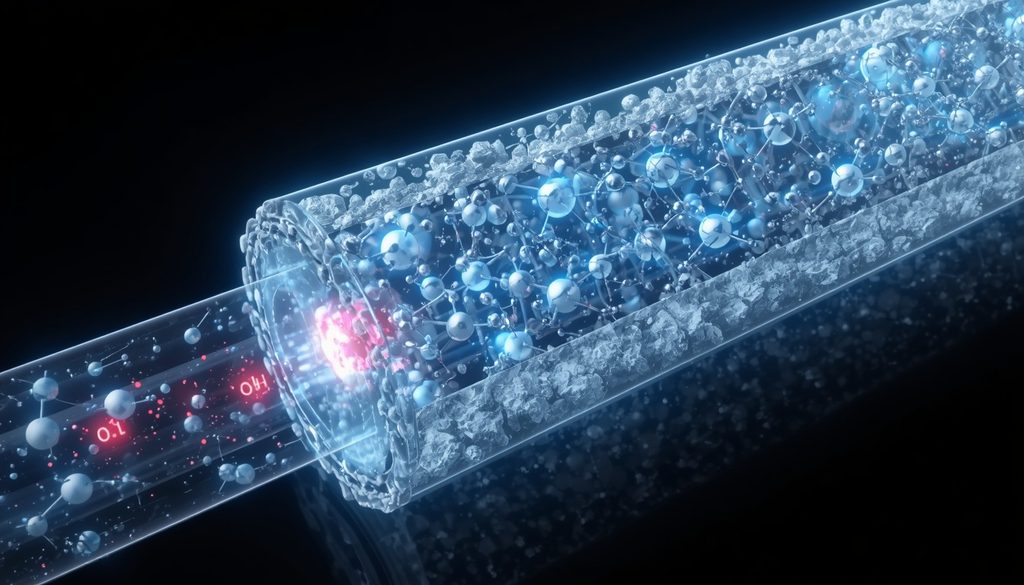
Zirconium does not sit on the surface of a glass fiber like a coating. It becomes part of the glass itself. This is what makes it so effective. Understanding how zirconium works at the atomic level explains why a fiber with the right zirconium content can survive inside Glass Reinforced Concrete for fifty years, while a fiber without it may fail in five.
Zirconium Enters the Glass Network
Glass is not a crystal. It is an amorphous solid, meaning its atoms are arranged in a disordered network rather than a repeating lattice. The main building block of ordinary glass is silica (SiO₂), where each silicon atom bonds to four oxygen atoms. These bonds form a continuous three-dimensional network.
When zirconium oxide (ZrO₂) is added to the glass melt, zirconium atoms take positions within this network. Each zirconium atom bonds to oxygen atoms, but the bonding geometry is different from silicon. Zirconium prefers a coordination number of six to eight, meaning it bonds with more oxygen atoms than silicon does. This creates a denser, more tightly connected structure.
The result is a glass network that is harder for hydroxide ions to break apart. The bonds between zirconium and oxygen are stronger and less polar than silicon-oxygen bonds, so they resist attack by alkaline solutions.
Chemical and Physical Barriers
Zirconium protects the fiber in two ways: chemically and physically.
Chemical protection. Hydroxide ions attack the silicon-oxygen bonds in glass. When zirconium is present, it competes with silicon for positions in the network. The zirconium-oxygen bonds are less susceptible to hydrolysis, meaning they do not break apart easily in water or alkaline solutions. A fiber with high zirconium content has fewer vulnerable silicon sites for hydroxide ions to attack.
Physical protection. Zirconium atoms are larger than silicon atoms. When they replace silicon in the glass network, they create a more compact and less permeable structure. The channels through which hydroxide ions would otherwise travel into the fiber become narrower and more tortuous. Alkali ions cannot penetrate as deeply or as quickly.
Together, these two mechanisms slow the rate of alkali attack dramatically. A fiber with 16% zirconium oxide may lose less than 1% of its mass after a year in alkaline solution. A fiber with 5% zirconium oxide may lose ten times that amount under the same conditions.
Why the Surface Is the First Line of Defense
Alkali attack begins at the fiber surface. This is where the fiber touches the pore solution of the cement matrix. If the surface can resist the first wave of hydroxide ions, the interior remains protected.
Zirconium strengthens the surface in a specific way. When glass fibers are drawn, the surface cools faster than the interior. This creates a thin skin with a slightly different composition. In zirconium-containing fibers, this skin is enriched with zirconium. It acts as a protective layer that slows the penetration of alkali ions into the fiber core.
This surface enrichment is not intentional. It happens naturally during the fiber drawing process. But it explains why zirconium is so effective even at moderate concentrations. The fiber uses its own manufacturing process to build its first line of defense.
The Role of Calcium and Other Elements
Zirconium does not work alone. It interacts with other elements in the glass composition, particularly calcium and sodium.
Calcium oxide (CaO) is added to glass fibers to improve their chemical durability. But in high-alkali environments, calcium can actually accelerate attack if it is not balanced with zirconium. Sodium oxide (Na₂O) is used to lower the melting temperature of the glass, but it also makes the network more open and vulnerable. Zirconium counteracts these effects by tightening the network and reducing the mobility of alkali ions.
The best-performing alkali-resistant glass fibers use a carefully balanced mix of zirconium, calcium, sodium, and other oxides. The zirconium content is the single most important variable, but it works best when the rest of the composition supports it.
Why Zirconium Does Not Stop Attack Completely
No fiber is immune to alkali attack. Zirconium slows the process, but it does not stop it entirely. Over decades, even high-zirconium fibers will lose some strength. This is why Glass Reinforced Concrete design accounts for long-term strength loss.
The goal is not to prevent degradation. The goal is to slow it enough that the panel remains safe for its intended service life. A façade panel designed for fifty years needs fibers that will still carry the required load after fifty years of exposure. Zirconium makes that possible by reducing the rate of attack to a manageable level.
The Practical Meaning for Glass Reinforced Concrete
For anyone specifying or producing Glass Reinforced Concrete, the message is clear. Zirconium is not a minor additive. It is the mechanism that makes the material viable in outdoor applications. A fiber without sufficient zirconium cannot survive the alkaline environment of cement. A fiber with it can last for generations.
This is why zirconium content is not a detail to be left to the fiber supplier. It should be specified, verified, and documented. It is the foundation on which every durability claim for Glass Reinforced Concrete rests.

Emma Clarke is an architect with a background in building materials and facade engineering. She has worked on GRC projects in various climates and specializes in material performance and restoration.