
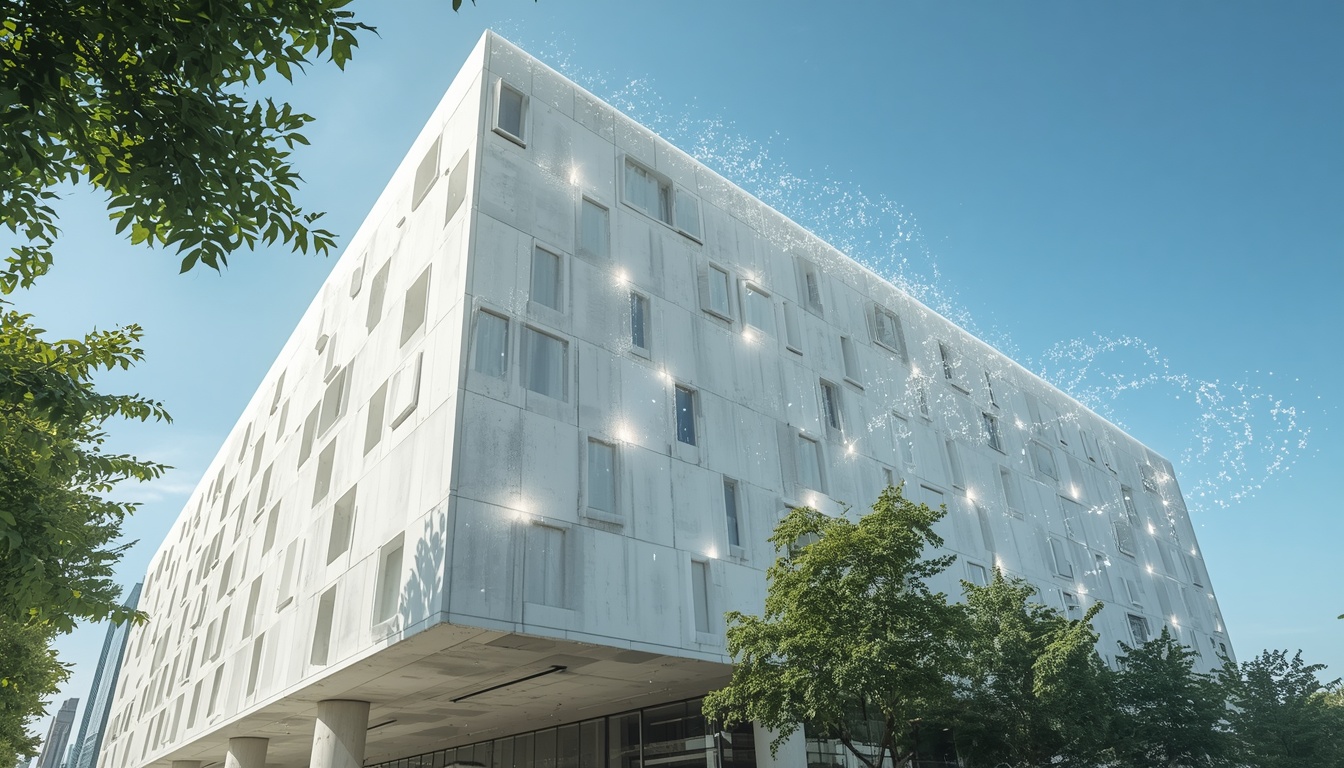
The construction industry’s environmental footprint has prompted material innovation. Traditional concrete production accounts for approximately 8% of global CO₂ emissions, with cement manufacturing as the primary contributor. Green GRC+ emerges as a solution to this challenge, offering a low-carbon alternative without sacrificing performance.
Glass Reinforced Concrete (GRC) already provides environmental advantages over conventional concrete through reduced material usage and extended service life. Green GRC+ builds upon these benefits by incorporating patent-pending formulations that further reduce embodied carbon . This innovation addresses the construction industry’s growing demand for sustainable building materials.
The Composition Behind Green GRC+
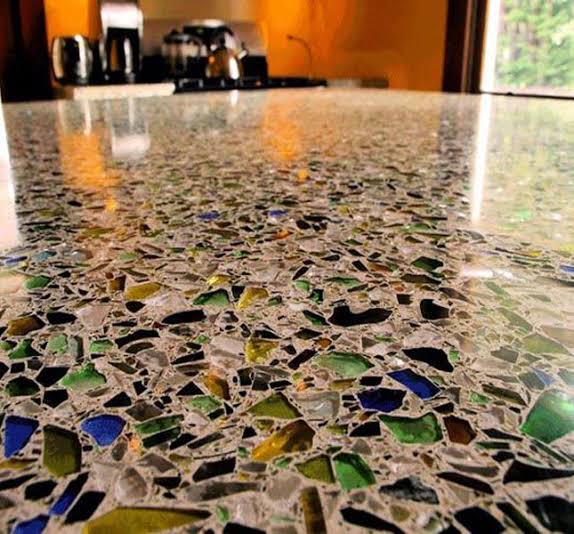
The formulation of Green GRC+ relies on industrial byproducts and waste materials as replacements for high-carbon components. The mix incorporates industrial wastes, recycled glass, and low-carbon aggregates to achieve over 50% carbon footprint reduction compared to traditional concrete . This substitution maintains structural integrity while significantly lowering environmental impact.
Supplementary cementitious materials (SCMs) play a crucial role in the formulation. These materials reduce the need for Portland cement, the primary carbon contributor in concrete production. Research into alternative binders continues to advance low-carbon formulations, including calcium sulpho-aluminate (CSA) cement as a viable Portland cement substitute . CSA-based systems demonstrate superior early-age strength, reduced shrinkage, and enhanced workability.
Performance Characteristics
Green GRC+ maintains the mechanical properties expected from glass fiber reinforced concrete while adding environmental benefits. Alkali-resistant glass fibers ensure adequate tensile and flexural strength for demanding architectural and structural applications . The material incorporates multi-fine crack technology, which reduces catastrophic failure risk and enhances serviceability . This technology ensures long-term performance comparable to conventional GRC.
The surface properties of Green GRC+ offer distinct advantages. The material achieves a hardened, durable surface resistant to weathering and mechanical damage . This durability extends service life and reduces maintenance requirements, contributing to sustainability through longevity. Photocatalytic technology represents a significant innovation, enabling the material to remove harmful pollutants such as nitrogen oxides (NOx) at rates of 2mg/m²/h when exposed to sunlight . This feature transforms building facades into active environmental improvement elements.
Thermal Management and Energy Efficiency
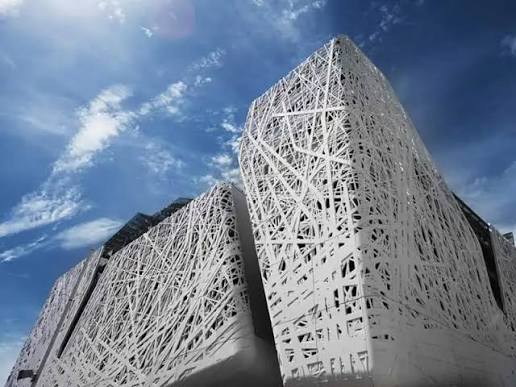
Green GRC+ addresses urban heat island effects through innovative surface properties. The material’s non-reflective heat “shedding” properties function effectively in both summer and winter conditions . This differs from conventional reflective coatings, which often intensify heat island effects by redirecting thermal energy to surrounding areas.
The thermal performance contributes to building energy efficiency. Reduced cooling requirements lower operational energy consumption, creating environmental benefits throughout the building lifecycle. This combination of embodied carbon reduction and operational efficiency positions Green GRC+ as a comprehensive sustainability solution for modern construction.
Photocatalytic Pollution Removal
The photocatalytic technology integrated into Green GRC+ represents an additional environmental benefit beyond carbon reduction. When exposed to UV radiation from sunlight, the material surface initiates chemical reactions that break down atmospheric pollutants . The NOx removal capability addresses urban air quality concerns, particularly in densely populated areas with traffic-related pollution.
This feature positions building facades as active environmental improvement tools rather than passive enclosures. For urban developments, specifying Green GRC+ can contribute to local air quality improvement while delivering architectural requirements.
Applications and Implementation
Green GRC+ finds application across architectural and urban design contexts. The material serves in building facades, urban furniture, and planters . Its versatility matches conventional GRC while adding sustainability credentials. The lightweight nature of GRC, enhanced by the Green GRC+ formulation, reduces structural loading and transportation costs.
Prefabrication benefits from the material’s properties. The development of self-compacting GRC (SC-GRC) using low-carbon binders enables automated production without vibration . This efficiency reduces manufacturing energy consumption and enables consistent quality control. The material’s workability and dimensional stability suit modular construction systems.
From Lab to Building Site
The transition from laboratory research to commercial application defines the next phase for Green GRC+ technology. Current research focuses on additional industrial byproduct utilization and alternative binder systems to expand formulation possibilities while further reducing environmental impact . The successful licensing of carbonatable fine-grained cementitious matrices indicates that commercial viability is approaching.
Low-pH binder systems represent a particularly promising research direction. These formulations improve glass fiber durability by reducing the alkaline environment that gradually degrades fiber performance over decades . Enhanced fiber longevity extends service life and reduces embodied carbon across the building lifecycle—a crucial consideration for sustainable construction.
Scaling production presents the next challenge. While laboratory results demonstrate the technical viability of Green GRC+, industrial-scale manufacturing requires process optimization and quality control systems. The integration of self-compacting GRC technologies enables automated production without vibration, reducing manufacturing energy consumption while enabling consistent quality. This efficiency positions Green GRC+ for adoption in modular construction systems.
Beyond technical development, market acceptance and certification will determine widespread adoption. The material’s ability to contribute to green building certifications like LEED and BREEAM accelerates its uptake in sustainability-focused projects. As regulations tighten around building emissions, materials that deliver both performance and environmental benefits will increasingly dominate construction specifications.
Climate-adaptive applications represent an emerging opportunity. Green GRC+ formulations can be optimized for specific environmental conditions—enhancing freeze-thaw resistance for cold climates or improving heat reflection for tropical regions. This adaptability ensures the material’s relevance across diverse geographic and climatic contexts.

Emma Clarke is an architect with a background in building materials and facade engineering. She has worked on GRC projects in various climates and specializes in material performance and restoration.