

Buildings consume nearly 40 percent of global energy, with heating and cooling accounting for the largest share. Standard insulation materials—expanded polystyrene, mineral wool, polyurethane foam—have remained largely unchanged for decades. They insulate adequately but come with trade-offs. Thickness requirements eat into usable floor space. Moisture management demands careful detailing. Fire performance varies widely between products. Acoustic insulation often requires separate layers and additional cost.
The construction industry has long sought a single material that addresses multiple performance criteria without sacrificing thickness or adding complexity. Aerogel composite GRC boards represent a response to this persistent challenge. The material combines the structural properties of glass fiber reinforced concrete with the thermal and acoustic performance of aerogel, a synthetic material derived from silica gel with extraordinary insulating properties.
What Makes Aerogel Different
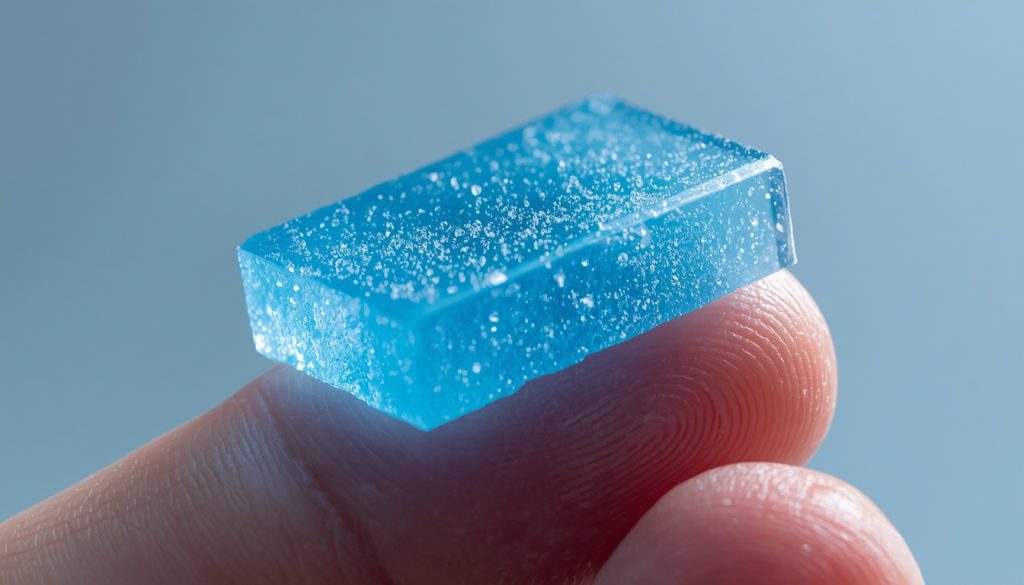
Aerogel holds the title of the world’s lightest solid material. Its structure consists of approximately 99 percent air trapped within a silica network. This structure gives aerogel exceptional thermal resistance. The material’s thermal conductivity ranges from 0.015 to 0.020 W/mK, significantly lower than conventional insulation materials. Mineral wool typically measures 0.035 to 0.040 W/mK. Expanded polystyrene falls between 0.030 and 0.038 W/mK. The difference translates directly to thinner insulation layers achieving the same thermal performance.
The material also performs well acoustically. The porous structure absorbs sound waves rather than reflecting them. This property makes aerogel effective at reducing noise transmission through building envelopes and interior partitions. The material’s sound absorption coefficient reaches 0.8 across certain frequency ranges, outperforming many dedicated acoustic products.
Aerogel itself presents challenges in construction applications. The material is fragile and expensive. It requires protection from mechanical damage and moisture. Incorporating aerogel into GRC boards solves these problems. The cementitious matrix protects the aerogel structure while the aerogel enhances the composite board’s performance.
GRC as the Structural Envelope

Glass fiber reinforced concrete provides the structural backbone for the composite board. GRC offers a combination of properties that suit building envelope applications. The material achieves high flexural strength through glass fiber reinforcement. Typical MOR (modulus of rupture) values range from 18 to 30 MPa, depending on fiber content and manufacturing method. The material’s density, approximately 1.8 to 2.1 g/cm³, remains lower than conventional concrete while maintaining adequate structural performance.
GRC is lightweight compared to precast concrete panels. This lightness reduces foundation loads, crane requirements, and installation time. The material also resists weathering, UV exposure, and freeze-thaw cycles when properly formulated. GRC panels can be cast in complex shapes and fine textures, offering architects design flexibility unavailable with thicker or heavier materials.
The material’s fire performance is another advantage. GRC achieves Euroclass A1 fire rating, meaning non-combustible. This characteristic makes GRC suitable for buildings where fire safety is a primary concern, including high-rise residential and commercial structures.
Composite Board Construction
Aerogel composite GRC boards typically consist of three layers. The outer layers are thin GRC panels, approximately 8 to 12 millimeters thick. The core contains aerogel particles bound in a lightweight matrix. The total board thickness ranges from 40 to 120 millimeters, depending on required thermal performance.
The manufacturing process places aerogel granules into the mold, followed by the GRC mix. The composite cures under controlled conditions to prevent damage to the aerogel structure. The finished board achieves thermal conductivity of 0.025 to 0.030 W/mK, comparable to aerogel itself. The aerogel volume fraction typically ranges between 40 and 60 percent of the core volume.
The composite boards weigh significantly less than solid GRC panels of the same thickness. This weight reduction improves handling and reduces transportation costs. The boards can be manufactured in sizes up to 3.6 meters by 1.8 meters, allowing for large prefabricated elements with fewer joints on site.
Thermal Performance and Energy Savings
The thermal performance of aerogel composite GRC boards meets or exceeds passive house requirements. A 60-millimeter board achieves a U-value of approximately 0.40 W/m²K, sufficient for most wall applications in temperate climates. Increasing board thickness to 100 millimeters brings the U-value below 0.25 W/m²K, suitable for highly insulated buildings.
The boards reduce thermal bridging through the building envelope. The continuous insulation layer eliminates gaps common in cavity wall insulation. The GRC outer layers provide thermal mass, storing heat during the day and releasing it at night. This passive thermal regulation reduces peak heating and cooling loads, lowering energy consumption across the building lifecycle.
Energy modeling studies indicate that buildings using aerogel composite GRC boards achieve annual heating and cooling energy reductions of 30 to 45 percent compared to buildings with standard insulation materials. The payback period for the increased material cost varies by climate and utility rates but typically ranges from 5 to 12 years.
Acoustic Performance and Noise Reduction
The aerogel composite structure attenuates both airborne and impact noise. Airborne noise reduction depends on board mass and airtightness, achieving sound transmission class (STC) ratings of 50 to 60 depending on board thickness and installation details. Impact noise reduction, relevant for floor assemblies, provides impact insulation class (IIC) ratings of 55 to 65.
The aerogel core absorbs sound energy within the board structure, reducing sound transmission through the building envelope. This absorption complements the mass-based sound isolation of the GRC layers. The combined effect reduces noise ingress from exterior sources like traffic and aircraft while limiting sound transmission between adjacent spaces.
Laboratory tests show that a 100-millimeter aerogel composite GRC board achieves a weighted sound reduction index (Rw) of approximately 55 decibels. This rating qualifies the board for use in multi-family residential and commercial projects where acoustic separation is critical.
Moisture Management and Durability
Aerogel composite GRC boards address moisture management through multiple mechanisms. The aerogel core is hydrophobic, preventing capillary water absorption. The GRC outer layers, when properly detailed, create a continuous air and moisture barrier. The assembly permits vapor diffusion, allowing any internal moisture to escape without trapping condensation in the wall cavity.
The materials resist the two primary threats to insulation performance: moisture ingress and air movement. Moisture reduces insulation performance and promotes mold growth. Air movement carries heat energy through building assemblies. The aerogel composite boards resist both, maintaining their stated thermal and acoustic performance over the building service life.
Accelerated aging tests indicate that aerogel composite GRC boards retain 95 percent of their initial thermal performance after 1,000 freeze-thaw cycles. The boards maintain structural integrity after exposure to 95 percent relative humidity and temperature cycling between -20 and 80 degrees Celsius.
Fire Performance and Safety
Aerogel composite GRC boards achieve the highest fire safety ratings for building materials. The boards are classified as non-combustible and achieve Euroclass A1 rating. The boards do not contribute to fire spread. They emit negligible smoke and no toxic gases when exposed to flame.
This fire performance distinguishes aerogel composite boards from polymeric insulation materials, which can contribute to fire spread and emit harmful smoke. The non-combustible assembly reduces fire insurance premiums and provides passive fire protection to structural elements.
Fire resistance testing at accredited laboratories has demonstrated that boards maintain their position in wall assemblies for up to 120 minutes in standard fire tests. This performance allows the boards to serve as both insulation and fire barrier in rated wall systems.
Installation and Installation Methods
Aerogel composite GRC boards install using standard construction techniques. The boards fix to structural framing using mechanical fasteners. The joints between boards seal with compatible adhesive and sealant. The surface is suitable for direct application of exterior finishes, including paint, render, or additional cladding.
The boards can be cut with standard masonry cutting equipment. The material is easily drilled, allowing for penetration of services like electrical conduits and plumbing connections. The lightweight nature of the boards enables installation by standard building crews without specialized equipment.
Installation time for aerogel composite GRC boards is comparable to or less than installation time for prefabricated panels. The reduced weight allows for efficient crane use on building sites. The boards are available with pre-installed lifting hardware, simplifying positioning and attachment to structural framing.
Architectural Applications and Design Flexibility
Aerogel composite GRC boards find application in exterior walls, interior partitions, and floor assemblies. The boards reduce wall thickness while maintaining thermal performance, increasing usable floor area. This benefit is particularly valuable in dense urban environments where every square meter of floor space matters.
The boards accept a range of surface finishes without compromising thermal or acoustic performance. The surface can be left as fair-faced GRC with visible texture, provided with a polished or painted finish, or covered with additional cladding materials. This flexibility allows architects to design distinctive facades while meeting building envelope performance requirements.
The boards have been used in new construction and renovation projects. The boards adapt to existing structures with minimal additional support. The composite panels also offer design opportunities for roofs, especially in retrofitting older buildings where traditional insulation thickness is insufficient.
Economic Considerations and Lifecycle Costs
The initial cost of aerogel composite GRC boards exceeds conventional insulation systems. The aerogel component accounts for the premium. However, lifecycle cost analysis yields a different picture. The combination of reduced energy consumption and extended service life can offset the higher first cost.
The thinness of the assembly contributes to economic value. Every 100 millimeters of insulation saved from the building envelope translates to additional rentable space across the building height. In high-value urban properties, this additional floor area can significantly improve project economics.
The boards also reduce labor costs. The ease of installation, reduced handling weight, and elimination of separate insulation and cladding layers shorten construction schedules. The finished product also simplifies maintenance during the building’s service life.
Environmental Impact and Sustainability
Aerogel composite GRC boards support high-performance building envelopes with a lower environmental footprint than comparable insulation systems. The material has been evaluated for its sustainability credentials. The boards extend service life of building facades compared to conventional panel systems. The insulation layer remains effective over the board’s service life, maintaining building performance without replacement.
The longevity of the panels reduces the environmental impact across the building’s lifecycle. The boards also contribute to better indoor environmental quality through improved thermal comfort and lower noise levels. The non-toxic nature of the components ensures that building occupants are not exposed to harmful emissions.
The boards also reduce operational energy consumption during the building’s service life. The improved insulation performance lowers heating and cooling loads, and the reduced energy consumption contributes to lower greenhouse gas emissions. The boards themselves incorporate materials that can be reclaimed, with the aerogel core separated and recycled after the building’s use.

Emma Clarke is an architect with a background in building materials and facade engineering. She has worked on GRC projects in various climates and specializes in material performance and restoration.