

Water features bring movement, sound, and visual relief to urban environments. Fountains cool public squares. Reflecting pools anchor building entrances. Water walls mask traffic noise in city centers. But water damages most building materials over time. Metals corrode. Natural stone erodes. Timber rots. Even conventional concrete suffers from freeze-thaw cycling, efflorescence, and chemical attack from treated water.
Glass fiber reinforced concrete offers an alternative. GRC resists water penetration better than ordinary concrete. The material’s dense microstructure limits capillary action. Glass fibers distributed throughout the matrix control cracking. The result is a material that survives decades of water exposure without losing structural integrity or aesthetic quality.
GRC fountains and water features have appeared in public spaces worldwide since the 1980s. The material’s design flexibility allows for shapes impossible with stone or cast concrete. GRC can form thin, graceful cascades. It can create complex geometric basins. It can mimic natural rock formations. And it does all this while weighing less than conventional concrete, reducing foundation requirements and installation costs.
Material Properties for Wet Environments
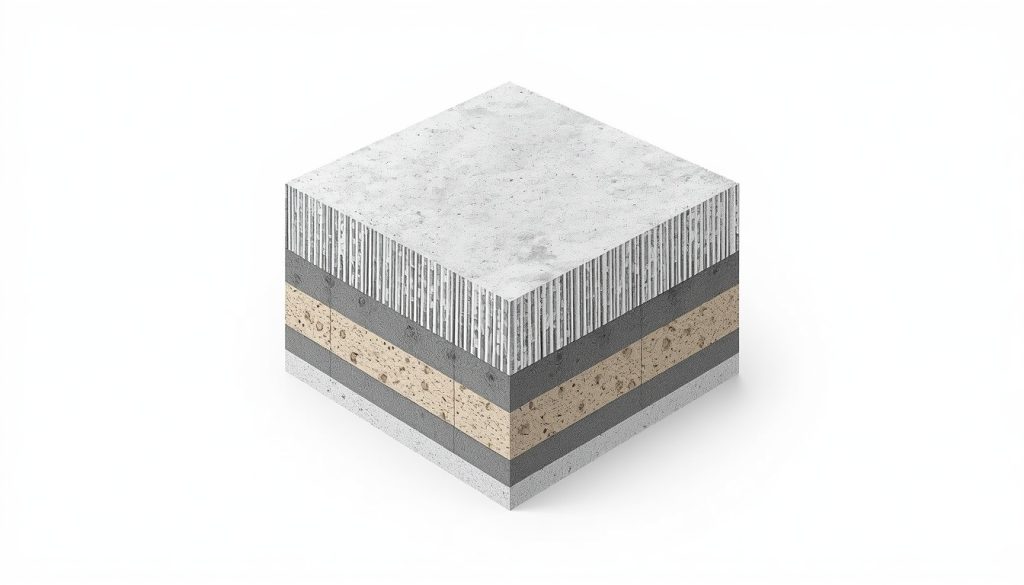
GRC’s performance in water features depends on several material properties. The alkali-resistant glass fibers prevent micro-cracking during thermal expansion and contraction. The cementitious matrix, when properly formulated, achieves low permeability. Water absorption rates for quality GRC products fall below five percent by weight. This stands in stark contrast to conventional concrete, which can absorb ten percent or more of its weight in water.
The material’s surface finish influences its water resistance. Smooth, dense finishes repel water more effectively than rough surfaces. The addition of integral waterproofing agents during mixing improves performance further. These agents fill capillary pores within the cement matrix, blocking water entry. The right formulation also resists efflorescence, the white salt deposit that mars many concrete water features.
Fiber content affects durability in wet environments. Higher fiber volumes, typically five percent or more by weight, reduce cracking tendency. Cracks provide pathways for water ingress, leading to freeze damage and reinforcing steel corrosion. GRC contains no internal steel reinforcement that could corrode, eliminating spalling risk. Glass fibers maintain their integrity within the alkaline cementitious environment.
The coefficient of thermal expansion for GRC approximates that of the cement matrix. This property reduces stresses during temperature changes. Water features experience daily and seasonal temperature fluctuations. Surface water can freeze in colder climates. GRC panels and basins accommodate these changes through their flexibility and crack resistance.
Design Freedom for Water Features
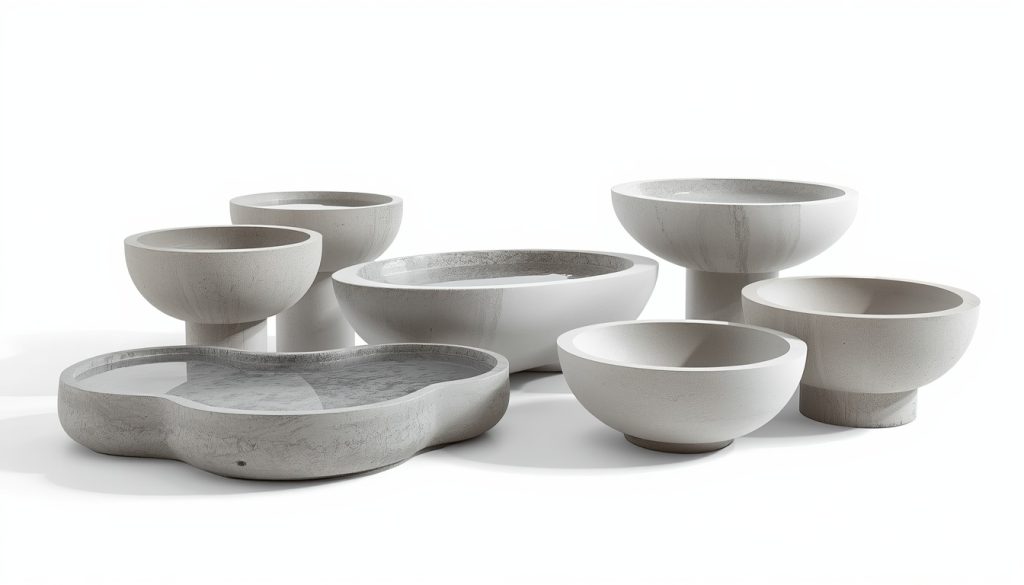
GRC casting techniques enable forms that other materials cannot produce. The spray-up process creates panels as thin as ten millimeters while maintaining adequate strength for structural applications. This thinness allows for elegant, lightweight water features that appear delicate but perform robustly.
The material accepts complex three-dimensional shapes. Freeform basins, sinuous channels, and sculptural elements emerge from molds with precision. Surface textures range from polished smoothness to rough stone finishes. Color is integrated throughout the material, not just applied as a coating. This ensures consistent appearance even after decades of water exposure.
Designers specify GRC for feature walls that incorporate flowing water. These walls integrate fountain nozzles, lighting fixtures, and water recirculation systems within the panel depth. The material’s workability accommodates prefabrication of complex assemblies. Manufacturers cast water channels, overflow weirs, and lighting cavities directly into GRC panels. On-site assembly becomes simpler and more reliable.
Fabrication Techniques for Water Features
GRC water feature fabrication employs multiple manufacturing methods. Hand lay-up suits custom, low-volume projects. The process places chopped glass fibers and cementitious matrix into rubber or fiberglass molds. This technique creates highly detailed surfaces with minimal tooling costs. Premium fountains and sculptural water features often use hand lay-up for its superior surface finish.
Spray-up GRC production serves higher volume applications. This method uses automated equipment to apply fibers and cement simultaneously. Molds rotate while operators direct spray heads across surfaces. The consistent fiber orientation and matrix density produce uniform mechanical properties. Spray-up suits repetitive basin shapes and modular water feature systems.
Premix GRC incorporates fibers into the cement mix before placement. The premix method simplifies production of relatively flat elements like channel bottoms and basin floors. Manufacturers can cast these elements using standard concrete equipment. Premix GRC panels produced to consistent quality exhibit good water resistance.
Post-curing procedures influence eventual performance. Properly cured GRC achieves maximum density and fiber-matrix bond strength. Steam curing accelerates the process in colder production environments. Some manufacturers apply surface sealers specifically formulated for water feature applications. These sealers provide additional protection against staining and algae growth.
Installation Considerations
GRC water features require careful base preparation. The substrate must be stable and level. Support structures need adequate stiffness to prevent basin flexing. Flexing can cause micro-cracking in the GRC shell, leading to leaks. Structural engineers calculate the required support spacing based on basin dimensions and water weight.
Joint detailing deserves particular attention. Water features contain many seams between precast elements. Movement joints accommodate thermal expansion without cracking. Waterproof gaskets or sealants at these joints prevent leaks. Careful design of interlocking edges simplifies sealing and assembly.
Pump and filtration systems integrate with GRC water features during installation. The GRC structure must accommodate pump housings, intake points, and return water inlets. Pre-cast holes and embedded fittings eliminate on-site drilling, reducing damage risk. Waterproof covers over access points maintain appearance while allowing equipment servicing.
Lighting features often accompany GRC water features. Optical fibers or LED modules embed within panels during fabrication. Waterproof fittings allow underwater illumination without penetrating the GRC shell. The translucent nature of thin GRC panels permits light transmission through the material itself.
Case Studies in GRC Fountain Applications
Public fountains constructed from GRC have demonstrated durability over decades. The material has been used in water features with continuous operation, with the structures surviving without major structural failure. The material’s performance is comparable to high-quality natural stone but at reduced weight and cost.
Fountains with complex water display patterns require precise engineering. GRC allows high precision in the production of nozzles and weirs. Flow rates and water distribution remain predictable over the structure’s life. The material’s resistance to wear from flowing water ensures performance over long periods.
Some notable installations incorporate GRC feature walls that integrate seating, planting, and lighting. These multi-functional assemblies demonstrate GRC’s versatility in landscape architecture. The material serves as both structural element and finish surface.
Maintenance Considerations
GRC water features require less maintenance than steel or stone equivalents. The material resists biological growth when properly formulated. Dense surfaces discourage moss and algae establishment. Occasional cleaning with low-pressure water removes surface deposits. Chemical cleaning agents formulated for concrete are safe for GRC.
Cracking repair procedures exist for any damage that occurs. Epoxy injection into cracks restores structural integrity. Color-matched repair mortars blend seamlessly with surrounding GRC. Professional restoration companies offer expertise in GRC water feature rehabilitation.
The material’s light weight facilitates maintenance access. Smaller GRC panels can be removed and replaced if necessary. This modularity reduces system downtime during repairs. Component replacement costs are generally lower than for alternative materials.
Sustainability Benefits
GRC fountains contribute to sustainable water management. The material’s durability means features need replacement less often. Reduced replacement frequency conserves resources and avoids disposal costs. GRC itself contains no hazardous materials and poses no risk to water quality.
Water features using GRC can incorporate rainwater collection and greywater systems. The material is chemically inert and will not contaminate collected water. GRC structures can support aquatic plants and beneficial biofilms without material degradation.
The long service life of GRC water features reduces the carbon footprint associated with their construction. The initial energy investment in manufacturing is amortized over decades. The absence of steel reinforcement eliminates corrosion-related maintenance and replacement.
Design Evolution
Contemporary landscape architects increasingly specify GRC for water features. The material supports contemporary design language while accommodating traditional forms. GRC bridges the gap between cast concrete’s affordability and natural stone’s aesthetic appeal.
Modern GRC water features incorporate programmable lighting and sound. The material’s compatibility with embedded technology allows responsive environments. Water walls change color and pattern throughout the day. Interactive fountains respond to visitor movements.
Digital fabrication techniques expand GRC’s possibilities. CNC-milled molds produce surfaces with exacting detail. Parametric design tools optimize water flow and structural performance. Future applications of GRC in water features will likely continue this trajectory toward more complex, responsive assemblies.
Conclusion
GRC offers architects and designers a material that manages water contact with minimal degradation. Its combination of durability, design flexibility, and reasonable cost explains its adoption for water features worldwide. The material’s track record in wet applications demonstrates reliability across decades of exposure. Further refinements in GRC formulations and manufacturing will likely expand its use in demanding aquatic environments.

Emma Clarke is an architect with a background in building materials and facade engineering. She has worked on GRC projects in various climates and specializes in material performance and restoration.