

The construction industry stands at a crossroads between proven performance and environmental responsibility. For decades, alkali-resistant glass textiles have served as reliable reinforcement in cementitious composites, offering corrosion resistance and dimensional stability that traditional steel cannot match. More recently, flax-based textiles have emerged as a sustainable alternative, promising reduced carbon footprints and renewable sourcing. Yet the question remains: can plant-based reinforcement truly compete with established synthetic options? Understanding the mechanical, durability, and environmental differences between these two material systems enables designers to make informed decisions for their specific applications.
Textile reinforced concrete represents an innovative structural type in which conventional steel reinforcement is replaced with fibre textile materials . The thin, cost-effective, and lightweight nature of these composites enables diverse architectural and civil engineering applications. Both flax and glass textiles function within this framework, yet their intrinsic properties diverge significantly, producing distinct performance profiles across multiple criteria.
Tensile Strength: The Fundamental Divide
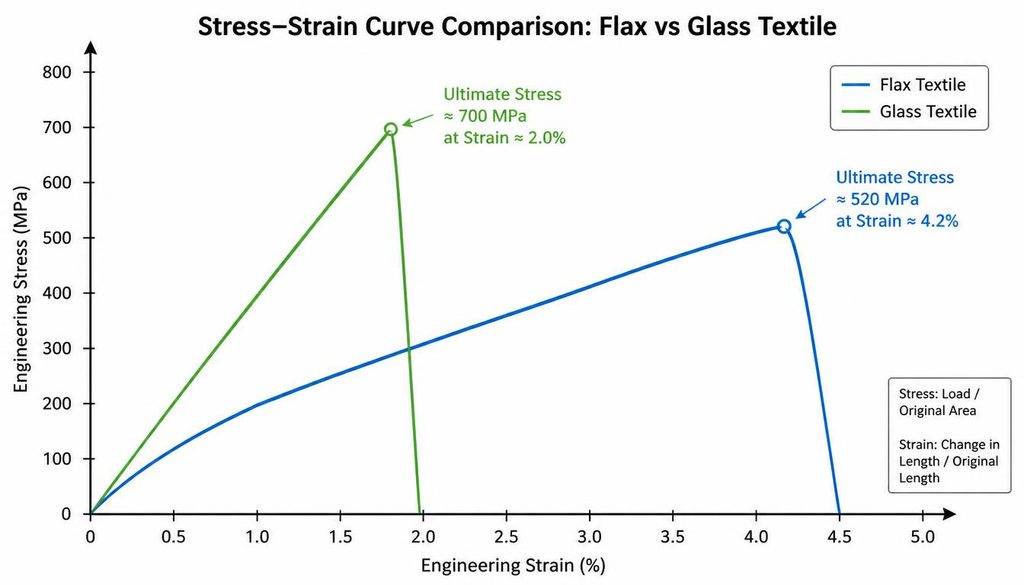
The most striking difference between flax and glass textile reinforcement emerges in their tensile characteristics. Laboratory testing reveals that glass fibre reinforced polymer (GFRP) grids achieve tensile strengths ranging from 315 to 543 MPa depending on mesh configuration, with elastic moduli between 19 and 39 GPa . These values reflect the inherent strength of glass filaments and their efficient stress transfer within the composite structure.
Flax fibre reinforced polymer (FFRP) grids, by contrast, demonstrate tensile strengths between 105 and 136 MPa, with elastic moduli of approximately 9 to 11 GPa . This places flax textiles at roughly one-quarter the tensile capacity of their glass counterparts. The disparity stems from fundamental differences in fibre architecture: glass filaments possess uniform, high-strength properties, while flax fibres exhibit natural variability and lower intrinsic strength.
This gap carries practical implications. Applications demanding high load-bearing capacity—structural retrofitting, thin-walled load-bearing elements, or seismic strengthening—generally favor glass textiles. However, the reinforcement ratio can compensate for lower material strength. Flax textile reinforced concrete (TRC) specimens often employ higher fibre volume fractions to achieve comparable structural performance, though this increases material consumption and cost .
Flexural Behaviour: Cracking and Load Distribution
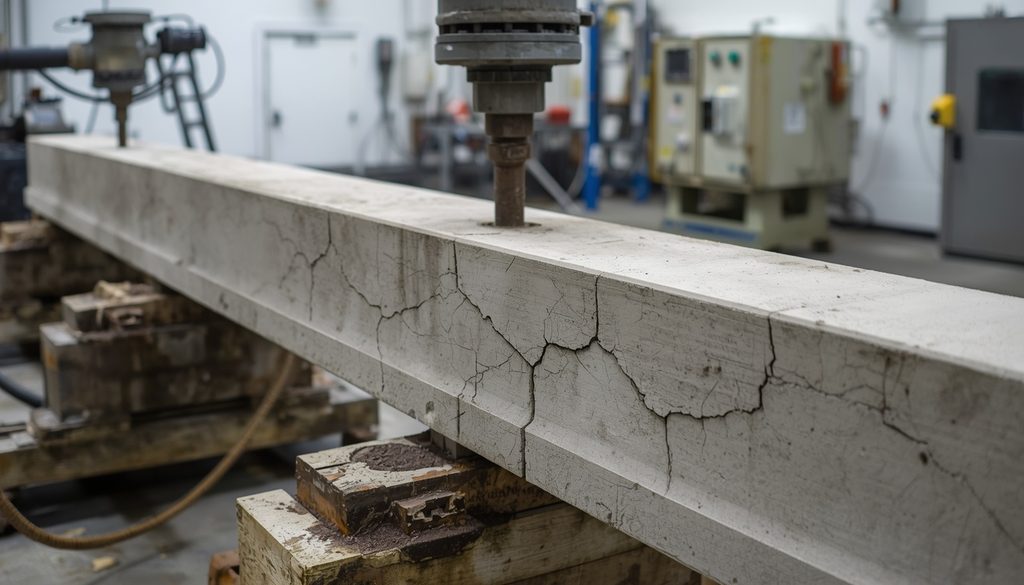
Flexural performance determines how reinforced concrete elements respond to bending loads, a critical consideration for slabs, panels, and beams. Both flax and glass TRC exhibit three distinct phases under flexural loading: an initial elastic region, a strain-hardening phase with multiple cracking, and a softening phase leading to failure .
Research demonstrates that textile geometry significantly influences flexural behaviour. Reducing mesh size from 20 mm to 2 mm increased flexural load and toughness by nearly 380% and 820%, respectively, in carbon textile specimens—a principle applicable to glass and flax systems . However, matrix penetration becomes problematic with extremely fine meshes, as insufficient cement paste infiltration reduces bond effectiveness.
The number of textile layers profoundly affects performance. Glass TRC specimens with four layers outperformed those with six layers under both static and dynamic loading, suggesting an optimal reinforcement configuration exists beyond which additional layers provide diminishing returns . For flexural strengthening, alkali-resistant glass fabric achieved up to 90% increase in load-bearing capacity when applied externally with three layers, though results varied due to slippage between textile and matrix .
Flax textiles show promise in flexural applications, particularly when fabric geometry and fibre volume fraction are optimized. Flax fabric provided better anchorage development than sisal and glass fabrics in cement-based composites, attributed to superior mechanical interlocking with the matrix .
Bond Behaviour and Interfacial Properties
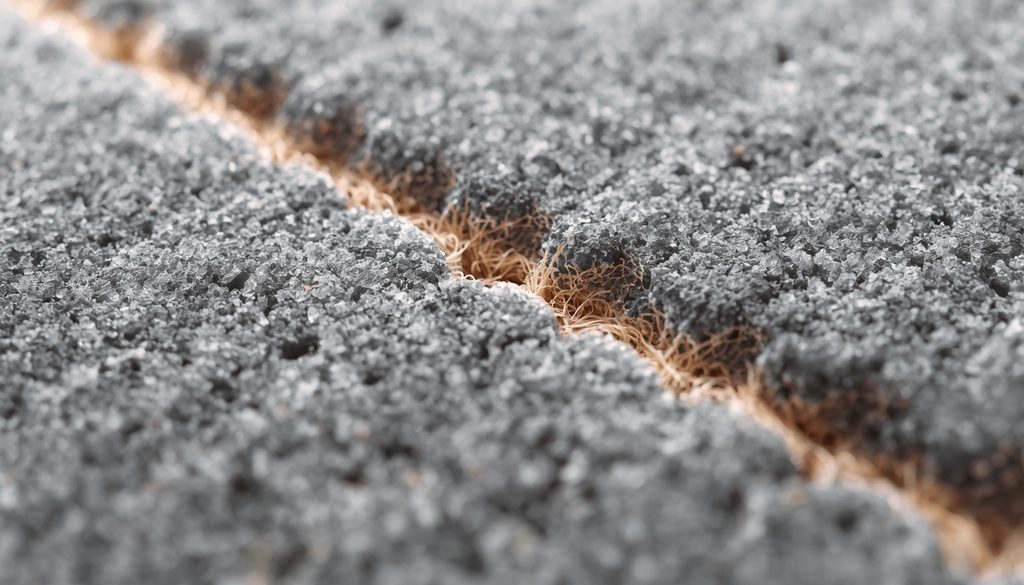
The interface between textile reinforcement and cementitious matrix governs stress transfer efficiency and composite action. Glass textiles benefit from established surface treatments and coating technologies developed over decades of use. Alkali-resistant glass fibres, produced with zirconium-containing compositions, resist the alkaline environment of fresh concrete while maintaining bond integrity .
Flax textiles present unique challenges due to their hydrophilic nature and complex surface chemistry. The substantial disparities in fibre morphology, hydrophilicity, and chemical composition between plant fibres and manmade fibres influence water transport and interfacial transition zone formation . Coatings and sizing serve multiple roles: increasing fibre strength by healing surface flaws, binding filaments for unified load carrying, improving fabric-matrix adhesion, and providing structure for handling during manufacturing .
Epoxy impregnation has emerged as an effective strategy for flax reinforcement. Epoxy-coated flax rods showed no significant tensile deterioration after wet-dry cycling, with only 9% decrease in average tensile strength and 10% decrease in E-modulus . This protection mechanism allows flax textiles to function effectively in concrete environments despite their inherent vulnerability.
Durability: The Alkaline Challenge
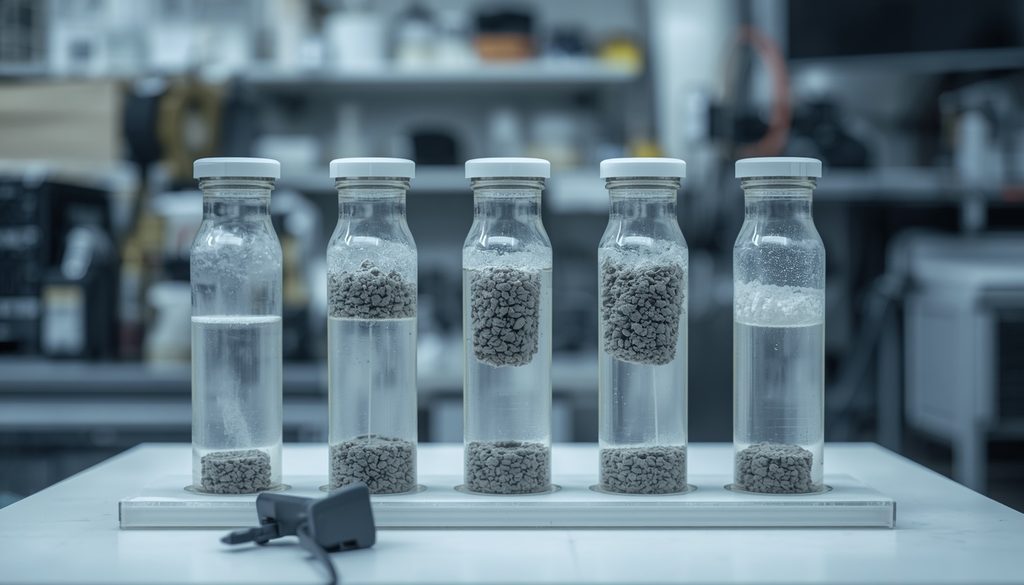
Perhaps the most critical distinction between flax and glass textiles lies in their long-term durability within concrete’s highly alkaline environment. Portland cement pore solutions typically exhibit pH values exceeding 12.5, conditions that degrade cellulose-based fibres through alkaline hydrolysis.
Untreated and rice husk ash-modified epoxy-coated flax rods experienced significant reductions in tensile load capacity—49% and 59%, respectively—after 30 weeks of exposure to simulated concrete pore solution . Stiffness decreased by 29% to 30%, while strain capacity dropped by 33% to 46%. Flax fibres extracted from these rods exhibited continuous decrease in hemicellulose and wax content, indicating progressive chemical degradation.
Glass textiles, particularly alkali-resistant formulations, demonstrate superior durability under identical conditions. AR-glass fibres maintain their mechanical properties over extended exposure periods due to their zirconium-rich composition, which resists alkaline attack . This durability advantage positions glass textiles favorably for applications requiring long service lives without performance degradation.
However, recent research offers hope for improving flax durability. Rice husk ash surface modification and matrix integration strategies showed promising results. Samples combining both approaches demonstrated 16% improvement in tensile strength after 30 weeks of exposure, while those incorporating either surface treatment or matrix modification showed no significant changes . The pozzolanic reaction of rice husk ash consumes calcium hydroxide, limiting its migration to fibres and reducing alkaline hydrolysis.
Environmental Impact and Sustainability
The environmental case for flax reinforcement rests on renewable sourcing and reduced carbon footprint. Flax fibres derive from the flax plant (Linum usitatissimum), a rapidly renewable resource requiring minimal agricultural inputs. Replacing synthetic fibres with plant-based alternatives reduces environmental impact, as confirmed by studies highlighting reduced carbon footprints when glass and polyacrylonitrile fibres are substituted with plant fibres .
Glass textile production, by contrast, demands significant energy for melting raw materials at temperatures between 1250°C and 1350°C . This energy-intensive process contributes substantially to embodied carbon. However, glass textiles offer longer service life without replacement, potentially offsetting initial environmental costs over a building’s lifespan.
Hybrid approaches attempt to balance these considerations. Combining flax strands with synthetic rovings creates hybrid reinforcements that enhance sustainability of purely synthetic systems while compensating for flax’s performance limitations . This strategy acknowledges that neither material perfectly satisfies all requirements, and optimization may involve strategic combination.
Thermal and Dynamic Performance
Textile reinforced concrete must perform under diverse loading conditions beyond static flexure. Dynamic testing of glass TRC at loading velocities from 1 to 4.5 m/s revealed that strain rate and reinforcement configuration significantly influence mechanical response . The number of textile layers proved critical, with four layers providing better dynamic performance than six layers, suggesting that excessive reinforcement can create stress concentrations or bond deficiencies under rapid loading.
Flax textiles under dynamic conditions remain less thoroughly characterized, representing a knowledge gap in the literature . Elevated temperature performance also differs between materials. Glass fibres maintain properties at temperatures where cellulose fibres begin to degrade, limiting flax applications in fire-exposed or high-temperature environments. Understanding these limitations guides appropriate material selection for specific project requirements.
Design Considerations and Application Suitability
Selecting between flax and glass textile reinforcement requires matching material properties to application demands. Glass textiles excel where:
- High tensile and flexural strength are paramount
- Long service life without performance degradation is required
- Elevated temperature exposure is anticipated
- Established design standards and testing protocols exist
Flax textiles offer advantages where:
- Environmental sustainability is a primary project goal
- Moderate structural demands allow for reduced performance
- Protective coatings and modified matrices can ensure adequate durability
- Renewable, bio-based materials align with client values
Hybrid configurations may prove optimal in many cases, leveraging glass’s strength and durability alongside flax’s environmental benefits. The reinforcement ratio can be adjusted to achieve target performance while maximizing sustainable content.
Conclusion: Complementary Materials for Diverse Needs
Flax and glass textiles represent fundamentally different approaches to concrete reinforcement, each with distinct advantages and limitations. Glass textiles deliver superior mechanical performance, proven durability in alkaline environments, and well-established design methodologies. Flax textiles offer renewable sourcing, reduced carbon footprint, and potential for agricultural waste integration through strategies like rice husk ash modification.
The performance gap between these materials narrows with appropriate engineering interventions. Epoxy coatings, surface modifications, and matrix additives can significantly improve flax durability, though glass maintains its inherent advantages in strength and long-term stability. Rather than framing this as competition, designers should view flax and glass as complementary tools, selecting or combining them based on project-specific priorities.
As research continues to address flax’s durability challenges and optimize hybrid systems, the construction industry gains increasingly sophisticated options for sustainable, high-performance textile reinforced concrete. The path forward involves neither wholesale replacement of proven materials nor dismissal of emerging alternatives, but rather thoughtful integration of both to advance construction toward greater environmental responsibility without sacrificing structural integrity.

Emma Clarke is an architect with a background in building materials and facade engineering. She has worked on GRC projects in various climates and specializes in material performance and restoration.