
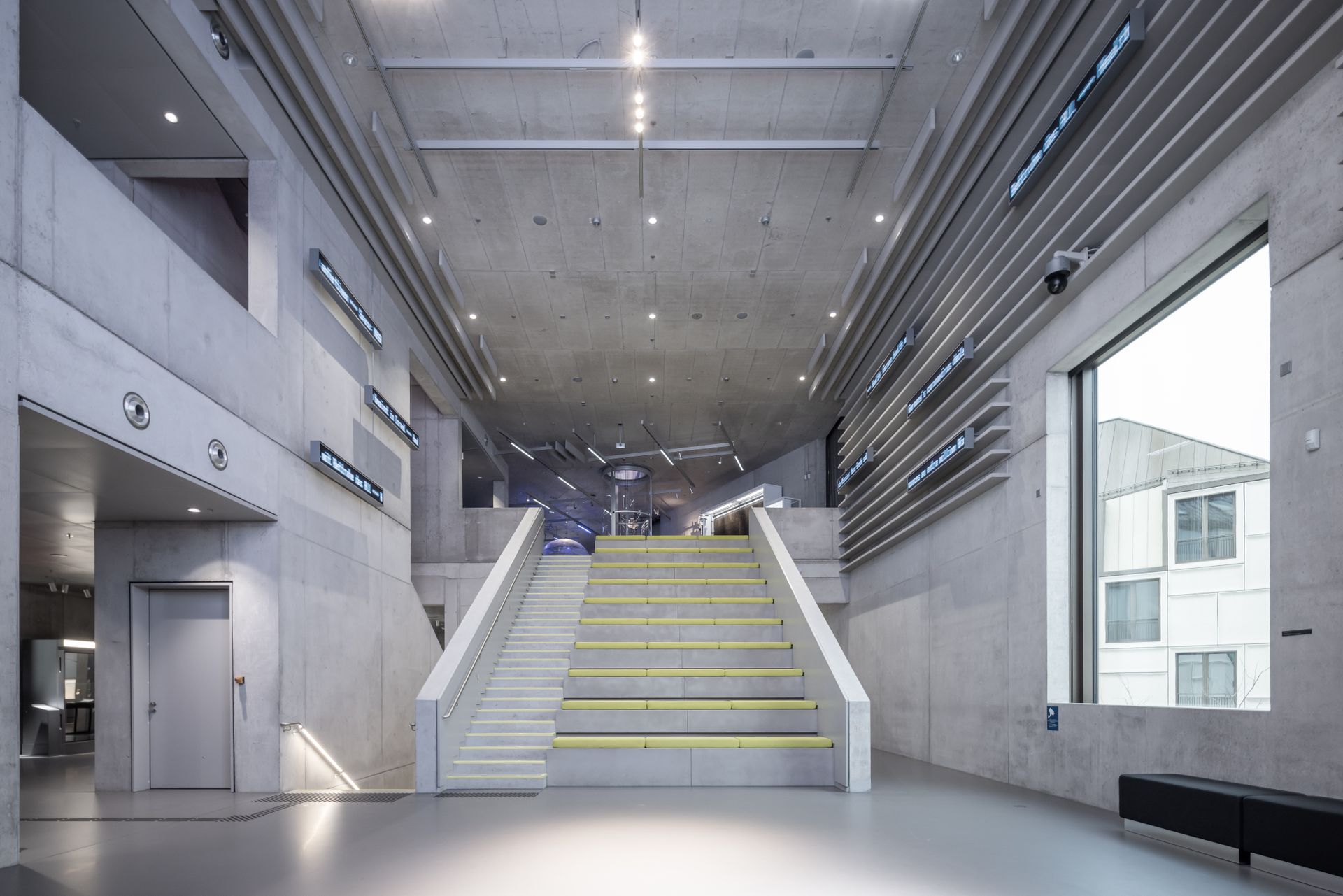
Glass Reinforced Concrete interior architecture is not a niche idea. The material has been moving indoors for years.. That is where most of the attention goes. But the same material has been moving indoors for years, and the reasons are practical, not just aesthetic.
Interior spaces have different demands than exteriors. Weight matters more because floors and ceilings have load limits. Thickness matters because walls cannot lose ten centimeters to cladding. Fire performance matters because people are inside the building. GRC handles all three. It is light, it can be cast as thin as 10–15 mm, and it is non-combustible.
The material also gives designers freedom that plasterboard, MDF, and stone cannot match. Curved walls, deep relief, fine moldings, and seamless transitions between surfaces are all possible with the right mold. The same casting process that produces exterior cladding panels can produce a reception desk, a ceiling panel, or a decorative wall feature.
Architects who work with Glass Reinforced Concrete already know this. Names like Zaha Hadid and Wolfgang Rieder pushed the material into new territory long before it became common indoors. Their work on facades and large-scale projects is covered in this overview of famous architects using glass reinforced concrete, and the same design language is now appearing in interior projects.
This article covers where GRC is used indoors, how it compares to traditional interior materials, what finishes work best, how it is installed, and what maintenance it needs.
Where Glass Reinforced Concrete Is Used Indoors
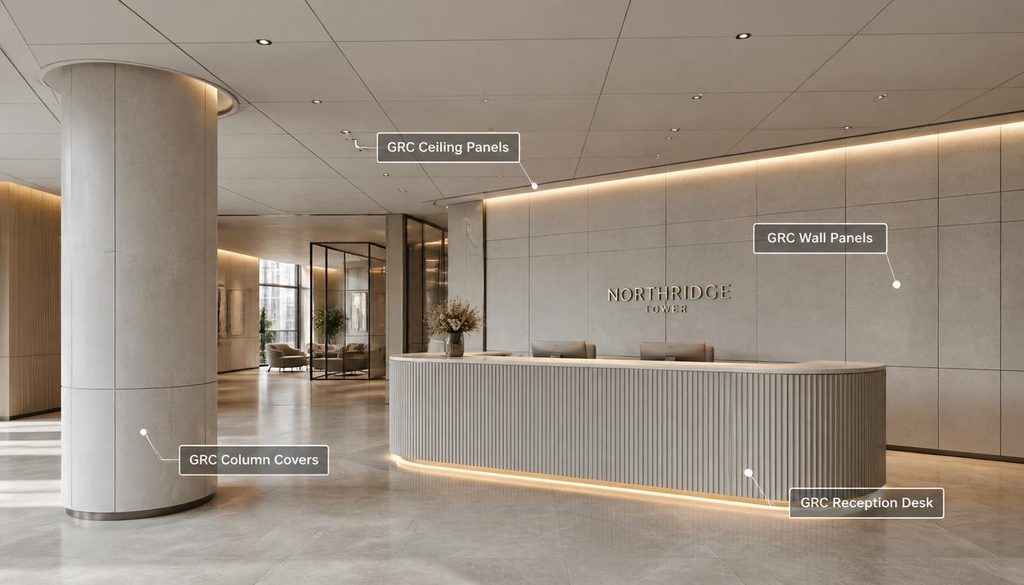
In Glass Reinforced Concrete interior architecture, wall panels are one of the most common uses. It shows up in more places than most people notice. The reason is simple: it can be cast into almost any shape, it does not weigh much, and it does not burn.
Wall panels and cladding
Interior wall panels are one of the most common uses. They can be flat or curved, smooth or textured, and they fit together with tight joints. Unlike plasterboard, they do not dent easily. Unlike stone, they do not need a reinforced substrate. A 12 mm GRC panel covers the same area as a 12 mm stone panel at a fraction of the weight.
Ceiling panels
Ceilings have strict load limits. GRC panels are light enough to hang on standard grid systems. They can be cast with integrated lighting coves, acoustic perforations, or decorative patterns. In large atriums and lobbies, GRC ceiling panels create continuous surfaces without visible seams.
Reception desks and counters
A reception desk is the first thing visitors see. GRC can be cast as a single curved piece with a seamless surface. No joints, no laminate edges, no visible fixings. The same applies to bar counters, hotel check-in desks, and retail cash wraps.
Column covers
Columns are often awkward. They interrupt the flow of a room. GRC covers can be cast as split shells that fit around the column and lock together. They can be round, square, fluted, or tapered. The result is a clean, finished surface that looks structural but adds almost no weight.
Decorative niches and shelving
GRC can be cast with integrated niches, shelves, and recesses. That means fewer separate parts and fewer joints to clean. In bathrooms and spas, this is a real advantage. No grout lines, no mold, no water damage.
Fireplace surrounds
A fireplace surround has to handle heat. GRC is non-combustible, so it does not burn, melt, or release toxic smoke. It can be cast in one piece with a mantel, legs, and hearth. It looks like stone but weighs far less.
Stair cladding and balustrades
Stairs take heavy use. GRC treads and risers resist chipping and wear. Balustrade panels can be cast with decorative patterns or left plain. Because GRC is light, it can be installed on existing stair structures without extra reinforcement.
Bathroom and spa surfaces
Wet areas need materials that do not absorb water or grow mold. GRC is dense and can be sealed. It works for shower walls, vanity tops, and bath surrounds. The surface is easy to clean and does not stain easily.
Retail and exhibition interiors
Shops and showrooms change layouts often. GRC elements can be cast as modular units that bolt together and come apart. They can be finished in any color or texture and reused in different configurations.
Interior GRC vs. Traditional Interior Materials
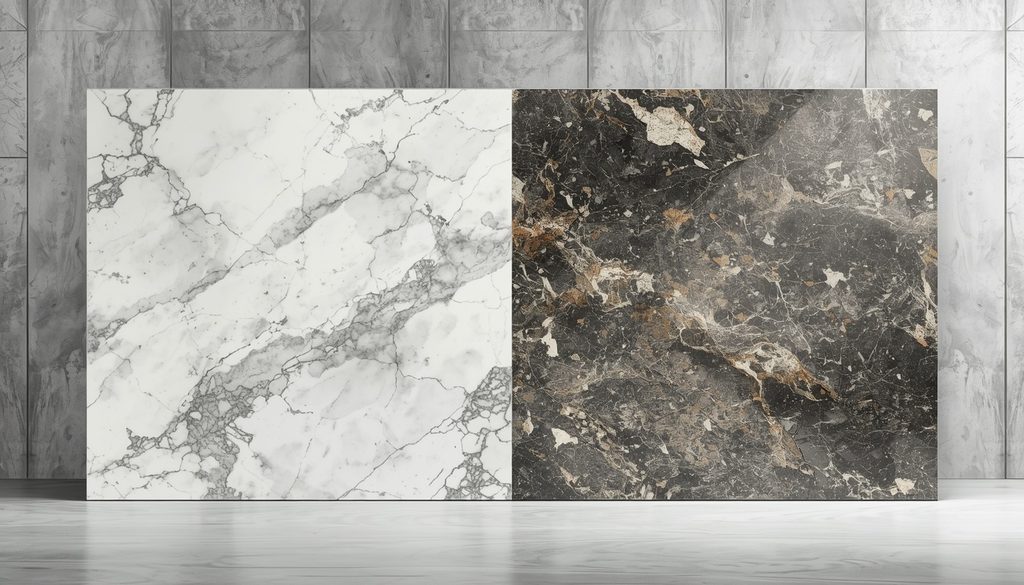
Glass Reinforced Concrete interior architecture does not replace every material, but in several areas it outperforms them. GRC is not always the answer, but in several areas it outperforms the materials it replaces.
GRC vs. plasterboard
Plasterboard is cheap, fast to install, and easy to paint. It is also soft. A door handle dents it. A chair back cracks it. Moisture turns it to mush. GRC does not dent, does not crumble when wet, and holds sharp edges. It costs more and takes longer to install, but it survives conditions that destroy plasterboard.
GRC vs. MDF
MDF is smooth, uniform, and easy to machine. It is also heavy, sensitive to moisture, and burns. GRC resists water, will not swell, and does not feed a fire. For feature walls, reception desks, and wet areas, GRC lasts longer and needs less repair.
GRC vs. natural stone
Stone is beautiful and permanent. It is also heavy. A 20 mm marble panel weighs around 50 kg per square meter. A 12 mm GRC panel with the same look weighs a fraction of that. Stone also cracks along natural veins and needs skilled labor to cut and polish. GRC can be cast in curves and complex shapes that stone cannot achieve.
GRC vs. ceramic tile
Tile is durable and easy to clean. It also has grout lines. Grout stains, cracks, and grows mold in wet areas. GRC can be cast as large seamless panels with no joints. The surface is smooth and non-porous when sealed. For shower walls and feature surfaces, fewer joints mean less maintenance.
GRC vs. cast concrete
Cast concrete has the same look as GRC but far more weight. A concrete countertop or wall panel needs a reinforced structure underneath. GRC can be thinner, lighter, and cast into shapes that concrete cannot hold without cracking.
GRC vs. fiberglass
Fiberglass is light and easy to mold. It also feels hollow, fades under UV, and can crack under impact. GRC has a solid, mineral feel. It does not flex or drum when touched. For interior surfaces that need to feel permanent, GRC is the better choice.
Design Freedom Indoors
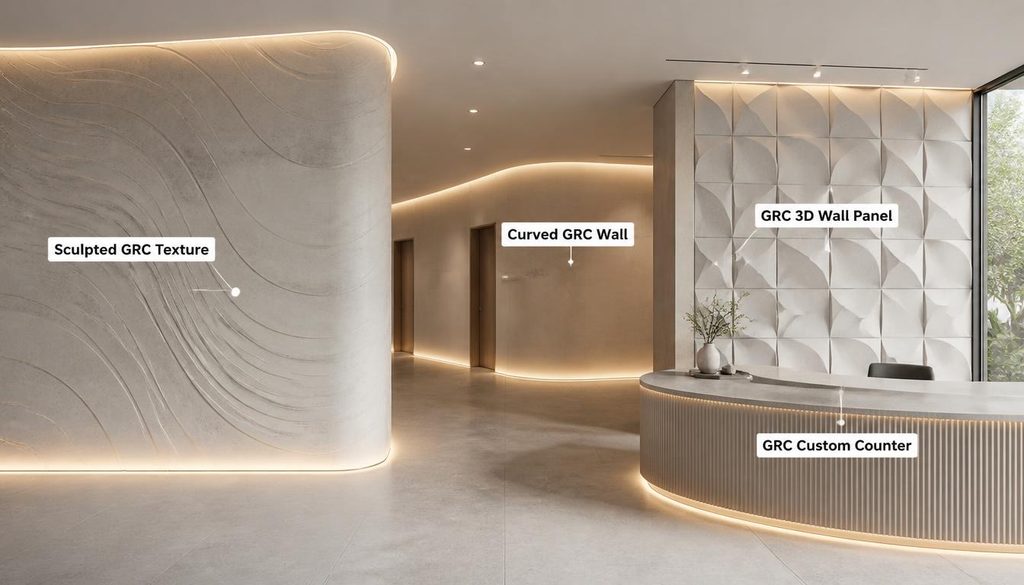
The main reason designers pick Glass Reinforced Concrete interior architecture is not strength or weight. It is the ability to make shapes other materials cannot. It is the ability to make shapes that other materials cannot. A mold is made once. After that, the same form can be repeated as many times as the project needs.
Curved surfaces
Walls, columns, and ceilings do not have to be flat. GRC can be cast as a single curved panel that wraps around a corner or follows a sweeping line. No joints, no filler, no visible seams. Plasterboard needs framing and still shows the curve. Stone cannot bend at all.
Deep relief and sculpted texture
Flat surfaces are easy. Deep relief is where GRC earns its place. A mold can carry patterns 20 mm or more deep. Wood grain, stone texture, geometric carvings, and abstract forms all come out of the same process. Plaster can do some of this, but it chips easily and does not hold sharp edges for long.
Fine moldings and profiles
Cornices, baseboards, architraves, and picture rails can be cast as part of the panel instead of added on later. That means fewer joints, fewer cracks, and a cleaner finish. The profile matches the original design exactly, every time.
Translucent and backlit panels
GRC can be cast thin enough to let light through. Combined with LED strips behind the panel, it creates a soft glow across the surface. This is common in reception areas, bar fronts, and feature walls. The effect is not possible with stone or plaster.
Three-dimensional wall features
A single mold can produce a repeating 3D pattern: waves, fins, pyramids, or organic shapes. The panels lock together to cover a large wall. The depth and shadow change through the day. Plaster and MDF can imitate this, but they need more support and they dent more easily.
Mimicking other materials
GRC can look like limestone, sandstone, polished concrete, aged wood, or brushed metal. The mold carries the texture and the surface finish does the rest. This gives designers the look of expensive materials without the weight, cost, or maintenance those materials bring.
Integrating functions into the panel
Lighting coves, ventilation slots, acoustic perforations, and cable routes can be cast into the panel itself. That means fewer separate parts, fewer trades on site, and a cleaner final surface.
Fire Performance and Safety
Fire is the one thing interior materials cannot ignore. Buildings are designed around how long a material can resist flames, how much smoke it releases, and whether it contributes to the spread of a fire. GRC performs well on all three counts.
Non-combustible by nature
The two main ingredients in GRC are cement and glass fibers. Neither burns. The resin or polymer content is minimal and does not turn the material into a fuel source. This is why GRC is classified as A1 non-combustible under European fire standards, the highest rating a building material can receive.
No toxic smoke
Materials like PVC, polyurethane foam, and some composite panels release dense smoke and toxic gases when they burn. Smoke is the main cause of death in building fires, not flames. GRC does not produce smoke because it does not burn. That matters in enclosed spaces where escape routes are limited.
Holds its shape under heat
Steel softens and bends at high temperatures. Aluminum melts. Some plastics lose all strength within minutes. GRC does not deform the way metals do. It may crack under extreme heat, but it does not collapse or drip. That gives occupants more time to evacuate and firefighters more time to work.
Where it is required
Fire-rated materials are mandatory in certain parts of a building:
- Escape routes, corridors, and stairwells
- Building cores and shafts
- Walls between different fire compartments
- Ceilings in public spaces
- Reception areas and lobbies in commercial buildings
GRC is often specified in these areas because it meets the requirement without adding significant weight.
Fire-rated panels and systems
Some GRC panels are tested as complete systems, not just as a material. That means the panel, the fixing method, and the substrate are tested together. A system test is more reliable than a material test because it reflects how the product actually performs on site. When a supplier offers a fire certificate, check whether it covers the full assembly or only the panel.
Limits to keep in mind
GRC itself does not burn, but the adhesives, sealants, and coatings used with it might. A fire-rated panel loses its rating if it is bonded with a flammable adhesive. The same applies to foam backings, plastic trims, and some paints. The full assembly has to be considered, not just the concrete.

Emma Clarke is an architect with a background in building materials and facade engineering. She has worked on GRC projects in various climates and specializes in material performance and restoration.