
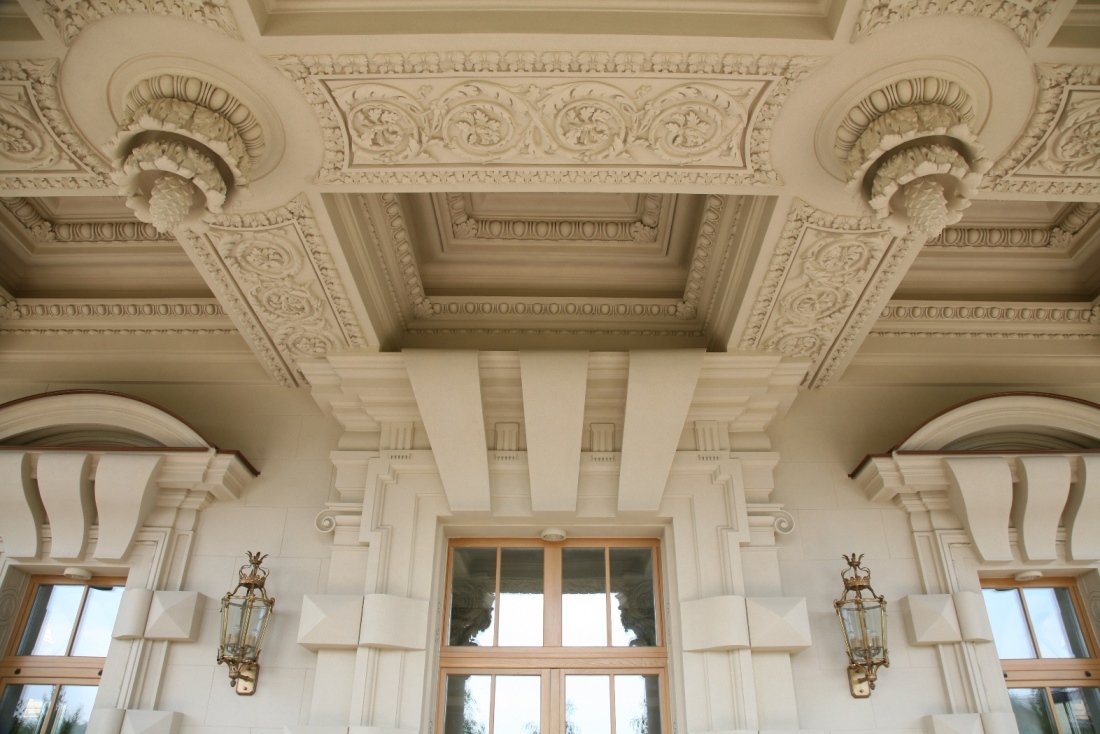
Old buildings were not designed for modern materials. Stone, brick, terra cotta, and lime mortar each have their own weight, movement, and weathering patterns. Drop a heavy precast concrete panel onto a historic facade and the structure may not carry the load. Use the wrong repair material and the original stone can crack or spall around it.
GFRC offers a different path. It looks like stone or terra cotta, but it weighs far less. That matters on buildings that were never engineered for extra load. It can be cast into fine details—cornices, moldings, capitals, balustrades—without the cost of carving new stone. And it can be finished to match aged surfaces instead of standing out as a modern patch.
Restoration work also comes with rules. Heritage boards review materials, finishes, and methods. Anything that touches a listed building has to match the original in appearance and behavior. GFRC can meet those rules when it is specified correctly, and it has been used in restoration projects around the world.
Architects who work with GFRC on new builds often bring the same material into restoration. The approach is not new. Designers like Zaha Hadid and Wolfgang Rieder have shown how far the material can be pushed in contemporary work. You can see some of those projects in this overview of famous architects using glass reinforced concrete.
This article covers how glass reinforced concrete is used in historic restoration: replicating original stone and terra cotta, replacing damaged elements, structural considerations for old buildings, finishes that match aged surfaces, and the approval process.
What Makes Glass Reinforced Concrete Historic Restoration Different?
Restoration is not the same as new construction. On a new build, you can design around the material. On a historic building, the material has to fit around the existing structure, the original design, and the rules that protect it.
Matching original materials
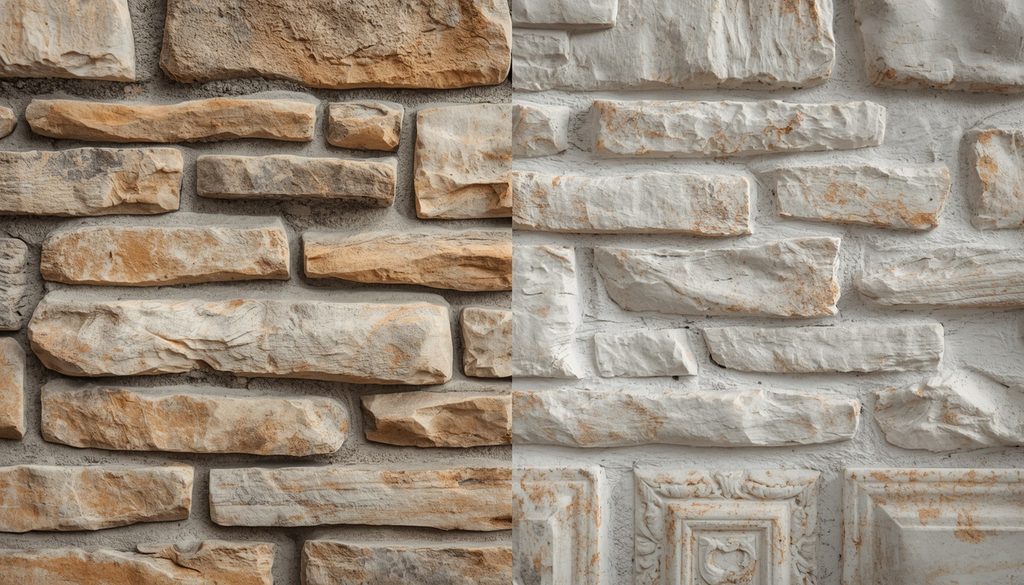
A restored element has to look like it belongs. That means matching the color, texture, profile, and finish of the original stone, brick, or terra cotta. A cornice that is too smooth or too sharp stands out. A balustrade with the wrong curve looks wrong from the street. Matching is not just about shape. It is about surface, shadow, and how the material ages.
Preserving architectural detail
Historic buildings often have details that are no longer made: deep moldings, carved capitals, decorative brackets, and ornamental panels. Reproducing those details in stone is expensive and slow. Reproducing them in concrete often means thick, heavy sections that do not match the original profile. GFRC can be cast from molds taken directly from the original elements, so the detail is preserved at the same scale and depth.
Meeting heritage regulations
Most historic buildings are protected. Any change to the facade or structure has to be approved by a heritage board or conservation officer. The approval process looks at materials, methods, and reversibility. GFRC is usually accepted when it matches the original appearance and does not damage the existing structure. It is not accepted when it looks modern, changes the building’s character, or traps moisture against original masonry.
Working with existing conditions
Old buildings move. Masonry expands and contracts. Mortar joints erode. Foundations settle. A restoration material has to handle that movement without cracking or pulling away. GFRC is more flexible than cast stone or precast concrete, so it can accommodate small movements. It is also lighter, which reduces stress on the original structure.
Limited access and site constraints
Restoration sites are often tight. Scaffolding is limited. Cranes may not fit. Heavy equipment can damage surrounding structures. Lightweight GFRC elements can be lifted by hand or with small equipment, which makes installation easier on constrained sites.
Why GFRC Works for Restoration Projects
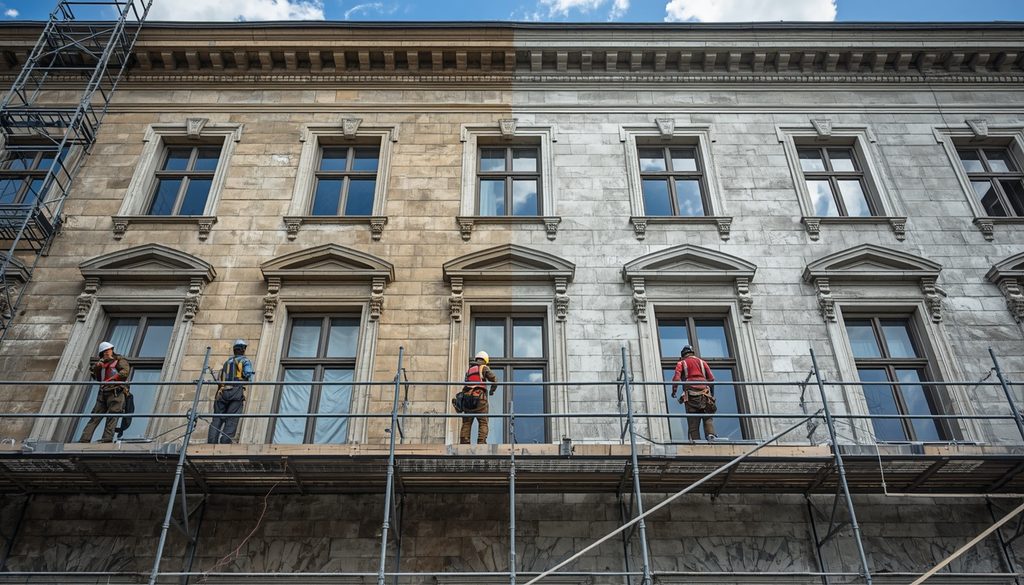
GFRC is not a magic material. It does not suit every restoration job. But in the right situation, it solves problems that stone, cast stone, and precast concrete cannot.
Lightweight for old structures
Historic buildings were designed for the loads they already carry. Adding heavy stone or concrete replacements can overload the structure. GFRC weighs 70–80% less than solid concrete and far less than natural stone. That means a replacement cornice or balustrade can be installed without reinforcing the original walls or foundations.
Moldable for intricate details
The detail on historic buildings is often deep, sharp, and complex. GFRC is cast in molds taken from the original elements, so the profile, depth, and texture are preserved. Cast stone cannot match that level of detail without thick sections. Precast concrete cannot match it at all.
Weather-resistant for long-term exposure
Restoration materials have to survive the same weather the original did. GFRC resists moisture, frost, salt, and pollution. It does not rust like steel-reinforced concrete. It does not erode like soft stone. It does not absorb water and crack in freeze-thaw cycles the way precast concrete can.
Compatible with traditional finishes
GFRC can be finished to look like limestone, sandstone, granite, or aged terra cotta. It can be acid-etched, sandblasted, or coated with mineral paints. The goal is not a perfect match on day one, but a surface that ages the same way as the original material around it.
Reversible and repairable
Heritage guidelines often require that new materials can be removed later without damaging the original structure. GFRC elements can be anchored mechanically rather than bonded permanently. Small damages can be filled and refinished on site. If a panel needs to be replaced, it can be removed without touching the original masonry.
Faster production and installation
Carving new stone takes months. Casting GFRC takes weeks. Molds can be made from existing elements, and multiple copies can be produced from the same mold. Installation is faster because the pieces are lighter and easier to handle. On projects with tight schedules and limited access, that speed matters.
Replicating Original Stone and Terra Cotta
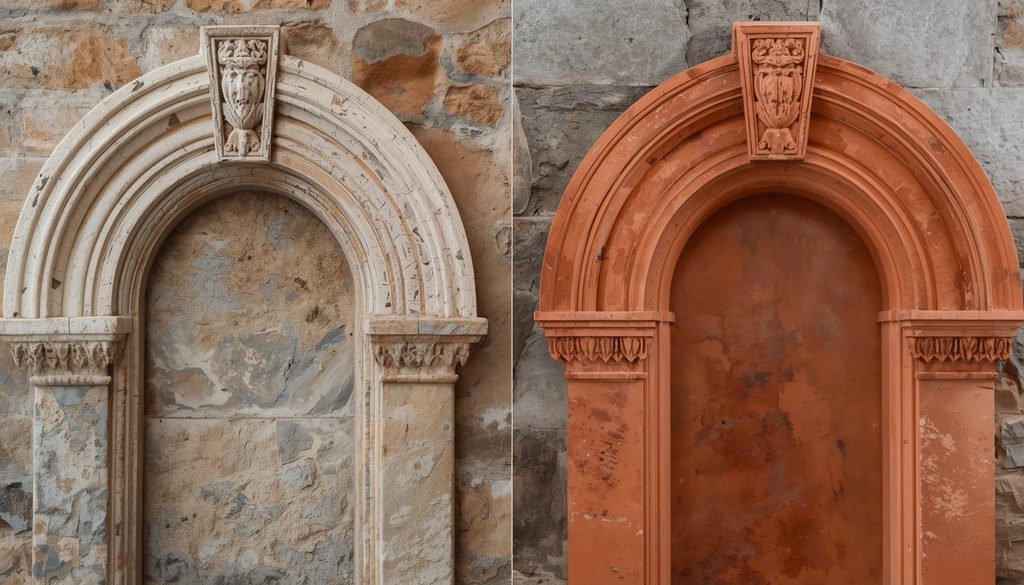
Most historic restoration work comes down to one problem: the original material is damaged, missing, or impossible to source. Stone quarries close. Terra cotta manufacturers shut down. Carvers retire. When the original cannot be replaced with the same material, GFRC becomes the next best option—if it is done right.
Matching texture and color
A GFRC replacement has to look like the original from a distance and up close. Color is the first challenge. Stone and terra cotta are not uniform. They have veins, mottling, stains, and variations that come from age and weathering. GFRC can be pigmented to match, but the match is rarely perfect on day one. The goal is to get close enough that the new element blends in as it ages.
Texture is the second challenge. Limestone has a fine grain. Sandstone is rougher. Terra cotta has a smooth, slightly glossy surface. GFRC can be finished to match each of these using molds, sandblasting, acid etching, and coatings. The mold itself carries the deep texture. The surface treatment handles the fine grain.
Casting from existing originals
The most accurate way to replicate a historic element is to take a mold directly from the original. If the original is still in place, a rubber mold can be made on site. If it has been removed, it can be molded in the workshop. The mold captures every detail: tool marks, chips, weathering patterns, and irregularities that make the original look real.
Sometimes the original is too damaged to mold. In that case, a new pattern is made based on photographs, drawings, or surviving fragments. The result is a close match, but not an exact copy.
Aging and patina effects
New glass reinforced concrete historic looks restoration new. Historic buildings do not. The contrast between a fresh replacement and 100-year-old stone is obvious. To avoid that, GFRC can be aged artificially.
Common techniques include:
- Acid washing to dull the surface and open the grain
- Mineral stains to add streaks and patches of discoloration
- Dirt and soot effects near joints and shadow lines
- Clear or tinted sealers to control how the surface weathers over time
The goal is not to fake age permanently. It is to reduce the visual jump between old and new so the replacement blends in from the start.
Limitations
GFRC cannot replicate everything. Some stones have unique crystalline structures or translucent qualities that GFRC cannot match. Some terra cotta glazes have a depth and reflectivity that coatings cannot reproduce. In those cases, GFRC is used for hidden or less visible elements, while the visible surfaces are restored with original materials.

Emma Clarke is an architect with a background in building materials and facade engineering. She has worked on GRC projects in various climates and specializes in material performance and restoration.