

Glass reinforced concrete suppliers is only as good as the supplier behind it. The same mix design, the same glass fibers, and the same production method can produce very different results depending on who is making it. A good supplier delivers panels that fit, last, and look right. A bad one delivers delays, defects, and repairs.
The problem is that GRC is not a commodity. It is a custom product. Every project has its own shapes, finishes, and performance requirements. That means the supplier has to do more than ship boxes. They have to understand the design, build the molds, control the mix, test the output, and support installation. Not every supplier can do all of that.
There is also a practical side. GRC is used in facades, cladding, landscape elements, and architectural features. Mistakes are expensive to fix once the material is on site. A panel that does not fit, a surface that fails, or a mix that cracks in frost all cost time and money. Choosing the right supplier before production starts is cheaper than fixing problems later.
This article covers what to look for in a Glass reinforced concrete suppliers: production capability, material quality, certifications, experience, design support, pricing, lead times, and after-sales service. It also lists the red flags that signal a supplier is not ready for your project.
If you want to see how GRC performs in real applications before choosing a supplier, this guide on GFRC in landscape architecture shows where the material is used and what it has to handle.
What Does a GRC Supplier Actually Do?
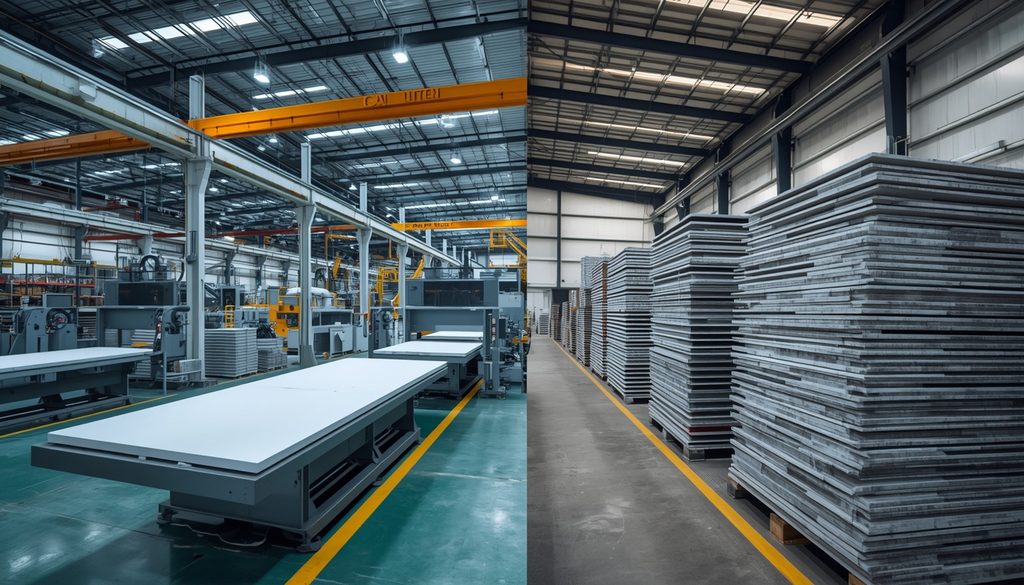
Most people think a Glass reinforced concrete suppliers just makes panels and ships them. That is only part of it. A good supplier does several jobs, and each one affects the final product.
Manufacturers vs. distributors
Some suppliers make GRC themselves. They mix the concrete, build the molds, cast the panels, and finish the surface. Others are distributors. They buy from manufacturers and resell. Distributors can be cheaper and faster for standard products, but they have less control over quality and lead times. For custom work, a manufacturer is usually the better choice.
Custom production vs. standard products
Some suppliers offer a catalog of standard planters, panels, and benches. Others produce only custom pieces. Standard products are cheaper and faster. Custom production gives you the exact shape, size, finish, and performance you need. Many suppliers do both, but the balance matters. A supplier that mostly sells standard products may struggle with complex custom work.
Design support and technical advice
A strong supplier does not just take orders. They help with the design. They advise on wall thickness, fiber content, mold design, anchoring, and finish. They point out where a design will not work and suggest changes before production starts. This saves money and prevents problems on site.
Mold making
Molds are the foundation of every GRC piece. Some suppliers build molds in-house. Others outsource them. In-house mold making gives better control over quality and lead times. It also makes it easier to adjust designs during production.
Testing and quality control
A good supplier tests the mix and the finished product. Flexural strength, tensile strength, impact resistance, and surface quality all matter. Without testing, there is no proof that the GRC meets the project requirements.
Installation support
Some suppliers only deliver to the site. Others provide installation guidance, brackets, anchors, and on-site support. For complex facades or large landscape projects, installation support can make the difference between a smooth job and a difficult one.
Production Capability and Capacity

A supplier can promise anything. What matters is whether they can actually produce your project on time and at the quality you need. That depends on their capability and their capacity.
Mold making in-house or outsourced
Glass reinforced concrete suppliers who build molds in-house have more control. They can adjust designs, fix problems faster, and keep production on schedule. Suppliers who outsource molds depend on another company. That adds lead time, cost, and risk. If the mold maker is slow, the whole project is slow.
Spray-up vs. premix capability
GRC is made in two main ways: spray-up and premix. Spray-up gives higher fiber content and stronger panels. It is used for architectural facades, large panels, and structural elements. Premix is used for smaller, decorative pieces and complex shapes. A supplier who only does one method can only handle certain projects. If your project needs both, the supplier needs both.
Production volume and lead times
Some suppliers make a few pieces a week. Others produce hundreds of panels a month. The size of the operation matters. A small workshop may give more attention to detail but struggle with large orders. A large factory can handle volume but may not take on small custom jobs. Ask about their monthly output, current workload, and typical lead times. A supplier who is already busy may not be able to meet your schedule.
Equipment and facilities
The right equipment matters. Spray guns, mixers, curing rooms, lifting equipment, and finishing tools all affect quality and speed. A supplier with proper facilities can control temperature, humidity, and curing. A supplier without them depends on the weather. That is a risk on any project with a deadline.
Scalability
Can the supplier scale up if your project grows? Can they handle repeat orders with the same quality? A supplier who is good for one panel may not be good for five hundred. Ask about their capacity before you commit.
Material Quality and Mix Design

Two suppliers can use the same ingredients and still produce very different GRC. The difference is in the mix design and how carefully it is controlled.
AR glass fiber content
The glass fibers are what make GRC strong. If the fiber content is too low, the concrete cracks. If it is too high, the mix becomes difficult to work with and the fibers clump together. Most suppliers use 3–6% fiber by weight, depending on the production method. Ask for the actual fiber content, not a range. A supplier who cannot answer that question is guessing.
The type of fiber matters too. AR glass is the standard for concrete because it resists alkali attack. E-glass and other types break down over time in the alkaline environment of cement. If a supplier uses anything other than AR glass, the material will not last.
Cement and aggregate quality
Cement is the binder. Its type and quality affect strength, color, and curing. Some suppliers use white cement, others use grey. Some blend in fly ash, silica fume, or slag. Each choice changes the final properties.
Aggregates—usually fine silica sand—also matter. The wrong size or type of sand affects workability and surface finish. Dirty or poorly graded sand weakens the mix.
Admixtures and polymer content
Admixtures control how the mix behaves. Superplasticizers improve flow without adding water. Polymer emulsions improve flexibility and reduce cracking. Accelerators and retarders control setting time. A good supplier adjusts these based on the project, not on habit.
Consistency between batches
The biggest risk is variation. One batch is strong. The next is weak. One panel is smooth. The next has defects. Consistency comes from accurate weighing, controlled mixing, and documented procedures. Ask how the supplier measures ingredients and how often they test. If they cannot show records, consistency is a guess.
Certifications and Standards
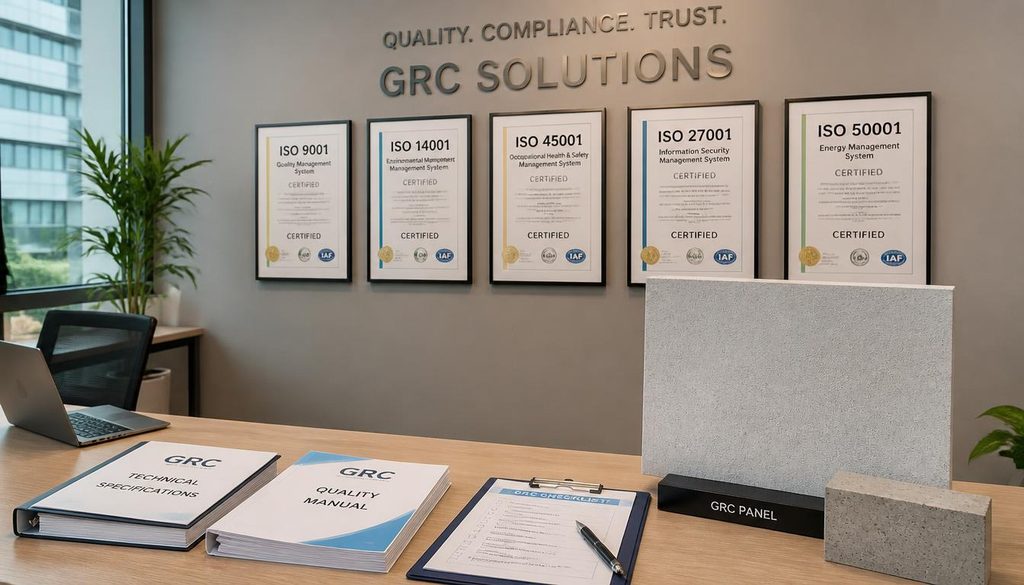
Certifications do not guarantee quality on their own. But they show that a supplier has been checked by someone outside their own company. For a material like GRC, where mistakes are expensive to fix, that outside check matters.
ISO certifications
ISO 9001 is the most common quality management certification. It means the supplier has documented procedures for production, testing, and record keeping. It does not prove the GRC is good, but it shows the supplier follows a system. ISO 14001 covers environmental management. ISO 45001 covers worker safety. These are not specific to GRC, but they indicate how the company operates.
GRC industry standards
GRC has its own standards. In Europe, the relevant standard is EN 1169 and the GRCA (Glassfibre Reinforced Concrete Association) guidelines. In the US, PCI (Precast/Prestressed Concrete Institute) publishes GRC guidelines. These documents cover mix design, testing, production, and installation. A supplier who follows them is working to a known benchmark. A supplier who has never heard of them is a risk.
Testing reports and compliance documents
Ask for test reports. Flexural strength, tensile strength, impact resistance, and density are the basics. These tests should be done on samples from actual production, not on special lab mixes. The reports should be recent and from a recognized testing lab. If the supplier cannot provide them, they are either not testing or not willing to share results.
Fire and weather resistance certificates
GRC is often used on facades and in public spaces. Fire performance and weather resistance are important. Some suppliers have fire test certificates from recognized bodies. Others have freeze-thaw and salt resistance data. These documents show the material has been tested under real conditions, not just in theory.
What certifications do not cover
Certifications do not cover everything. They do not prove the supplier will meet your deadline. They do not prove the finish will match your sample. They do not prove the price is fair. They are one piece of the picture, not the whole picture.

Emma Clarke is an architect with a background in building materials and facade engineering. She has worked on GRC projects in various climates and specializes in material performance and restoration.