
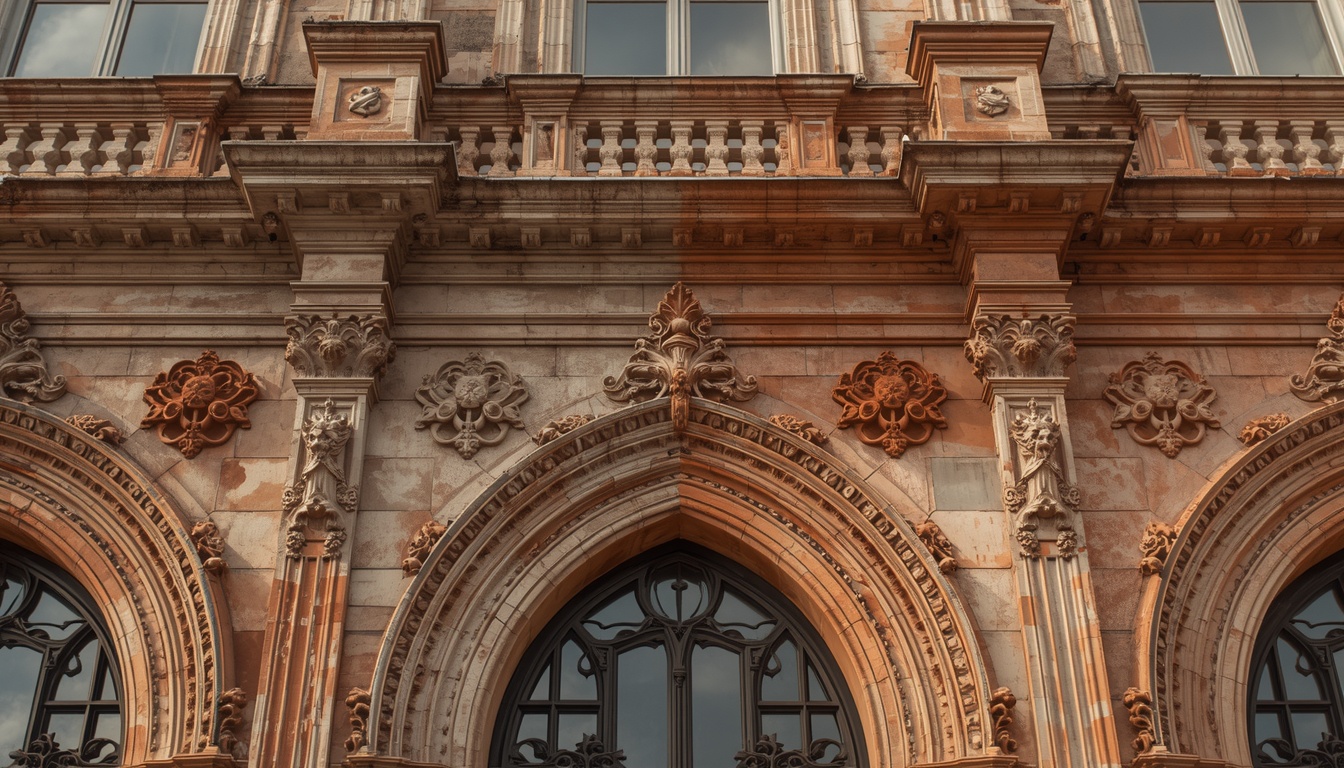
Historic buildings face a constant battle against time. Terracotta and natural stone ornaments, once symbols of architectural achievement, gradually decay through weather exposure, thermal movement, and structural settlement. These materials, prized for their aesthetic qualities, often prove vulnerable to the very forces that make buildings meaningful. The problem grows more urgent as original craftspeople retire and traditional skills fade.
Terracotta enjoyed particular popularity in the United States from the late nineteenth century through the 1930s. Architects specified it as an inexpensive, lightweight alternative to natural stone ornamentation . The material could be molded into complex shapes and glazed in vibrant colors. Thousands of buildings across the country incorporated terracotta cornices, window surrounds, and sculptural details. But the same material that allowed architectural flourish also created preservation headaches.
The deterioration mechanisms are well documented. Buildings designed without expansion joints trap thermal movement. As the structure expands and contracts, terracotta pieces crush against each other. Water penetrates the cracks, attacks embedded steel anchors, and freezing temperatures exert tremendous prying action. Pieces weighing over ten kilograms have fallen from heights exceeding thirty meters . The problem is not merely aesthetic but poses genuine public safety risks.
Why GRC Became the Preservationist’s Choice
Glass fiber reinforced concrete emerged as the preferred replacement material for several compelling reasons. The material offers the ability to replicate fine surface detail with remarkable precision. Traditional stone carving or terracotta firing cannot match the consistency of GRC molding. The material captures textures, moldings, and sculptural forms with high fidelity to the original.
The weight advantage proved decisive. GRC units typically measure six to thirty millimeters in thickness, depending on size and design requirements . This thinness translates to approximately ten percent of the weight of traditional concrete sections of equivalent size. The lightweight characteristic reduces structural loading on aging buildings and simplifies installation logistics. Heavy terracotta replacements might require foundation reinforcement that GRC avoids.
The material’s compatibility with independent attachment systems enabled a fundamental design improvement. Historic terracotta was often installed integrally with masonry, locking pieces into rigid assemblies that could not accommodate building movement . GRC units are individually supported on galvanized steel channels and clips, allowing adjustment in three planes. Every joint can accommodate approximately 2.5 millimeters of movement, creating a rain screen that absorbs thermal expansion without crushing .
A Monumental Case Study: Shepard Hall
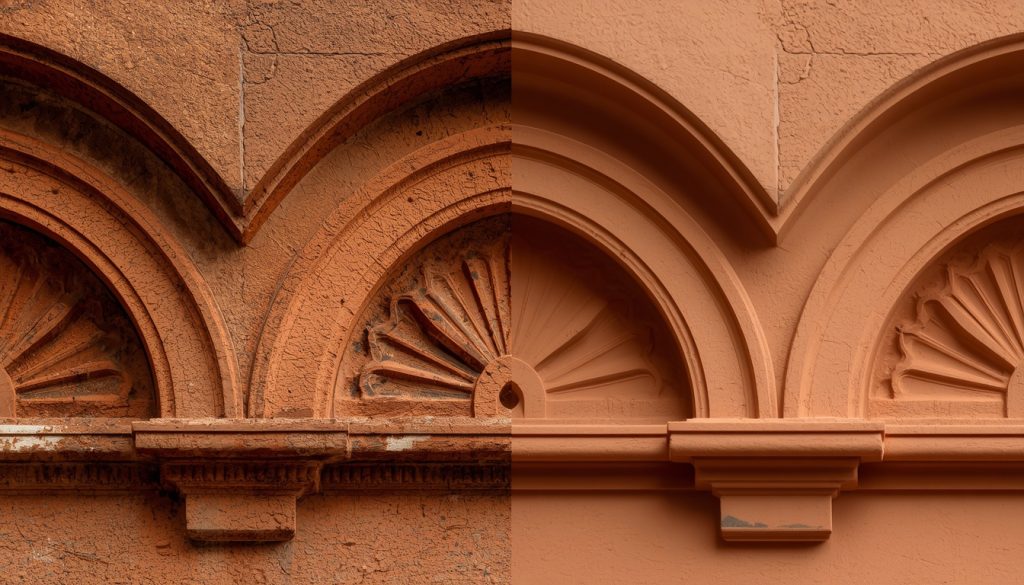
The reconstruction of Shepard Hall at the City College of New York stands as the defining project for GRC in heritage restoration. Completed in 1907, this Gothic Revival structure originally incorporated more than 72,000 individual terracotta pieces into its 36,000 square meter envelope . By 1986, more than one-third of the original terracotta had failed and been replaced with brick and stucco. Even those repairs were already failing.
The scope of the work was staggering. The first phase alone was more than three times larger than any similar project undertaken anywhere in the United States, yet represented less than twenty percent of the entire reconstruction . The design team needed a material that could precisely replicate detail, accommodate building movement, and integrate with irregular stone masonry. GRC proved the answer.
The solution involved removing all remaining terracotta and replacing it with brick or stone to a plane approximately ten centimeters behind the eventual finished face . GRC replicas of the terracotta forms were then individually attached to the new masonry using the adjustable steel system. Unit dimensions were established at a nominal material thickness of sixteen millimeters with a fifty-millimeter edge return for stiffening. The zone behind the replicas was fully flashed and waterproofed, essentially creating a Gothic Revival rain screen.
The project stretched across decades. The first GRC installations went into place in 1993. The final pieces were installed in 2013 . Over that twenty-year period, the GRC units were produced by four different suppliers, fabricated at seven different production plants, and installed by three different contractors. Despite this fragmentation, visual consistency was maintained. Adjacent GRC units installed more than fifteen years apart appear identical. This remarkable achievement validates the dimensional stability inherent in the GRC production process.
Material testing played a crucial role in ensuring long-term performance. The feasibility study included accelerated aging tests emphasizing environmental stability and color retention . As the first phase was completed in 1990, a new series of tests evaluated thirteen different GRC formulations. One system incorporating metakaolin and small amounts of polymer tested significantly better than the rest. The finished surface received a breathable silane sealer to minimize dirt accumulation and reduce temporary color change when wet. The material has performed well for over three decades.
Technical Considerations for Replication
The production process begins with careful documentation. The original terracotta or stone elements must be photographed, measured, and often removed for mold making. Models or patterns are created from the originals, capturing every nuance of the ornament. These patterns serve as the basis for the molds into which the GRC mix is sprayed or poured. The molds can be made from rubber, fiberglass, or plaster, depending on production volume and required detail.
Joint detailing demands particular attention. The joints between GRC units must accommodate movement while preventing water ingress. The Shepard Hall system utilized a three-part approach: expanding foam tape, closed-cell backer rod, and polyurethane sealant . Where GRC meets irregular stone masonry, traditional mortar joints are used with eight-millimeter foam tape behind to allow sealant application. The system has proven effective across numerous construction contracts.
The cost structure of replication projects differs significantly from standard GRC production. Because of the complexity of the shapes and the requirements for patterns and molds to replicate sculpted originals, the raw material cost becomes a relatively small part of the total finished GRC cost . Economy in material use is less important than dimensional accuracy and surface quality. Projects often intentionally ignore typical GRC economies to prioritize faithful reproduction.
Contemporary Applications and Adaptations
The successful use of GRC for heritage replication has expanded dramatically since the Shepard Hall project. Buildings with terracotta cornices, stone window surrounds, and sculptural brackets now regularly receive GRC replacements. The material can be produced from molds taken directly from the building, ensuring an exact match to the original . Manufacturers create color-matched samples for approval before full production commences.
A recent example involves a five-story building constructed in 1916 with a glazed terracotta cornice that included an integral gutter . The cornice deteriorated and required replacement. GRC was selected because of its lower cost, its ability to replicate terracotta, and its local production availability. The synthetic replacement met the building’s preservation requirements while fitting the project budget.
The Berlin High-rise Building Württembergische Straße demonstrates GRC’s role in adapting historic structures for modern use . The listed office building underwent comprehensive renovation with 3,500 glass fiber reinforced concrete elements from Rieder. The lightweight concrete parts feature a simple hanging system that allows on-site adjustment and precise fitting. The elements, with a calculated lifespan of over fifty years, neither need sanding nor repainting, conserving resources and contributing to energy efficiency.
The Trace project in London extends the replication concept into circular economy territory . Architects Bureau de Change developed a site-specific GRC composite using materials salvaged from the original building. The existing brown bricks were crushed to create a new textured artificial stone, which was then used to clad the building. This approach preserves the original foundations and main structure while creating a materially expressive facade that both preserves and reinterprets the building’s history.
Heritage restoration with GRC has transitioned from novelty to standard practice. The material’s ability to replicate fine detail, its lightweight nature, and its compatibility with independent attachment systems make it ideal for replacing deteriorated stone and terracotta. The Shepard Hall project demonstrated that GRC could perform over decades across thousands of units. Contemporary projects continue to push the boundaries, incorporating recycled materials and circular economy principles.
The key to successful replication lies in careful documentation, precision molding, and attention to joint detailing. Color matching, surface texture, and dimensional accuracy determine the quality of the final result. When these factors are properly addressed, GRC units integrate seamlessly with historic fabric, preserving the building’s character while extending its service life. The technology has given preservationists a powerful tool for safeguarding architectural heritage for future generations.

Emma Clarke is an architect with a background in building materials and facade engineering. She has worked on GRC projects in various climates and specializes in material performance and restoration.