
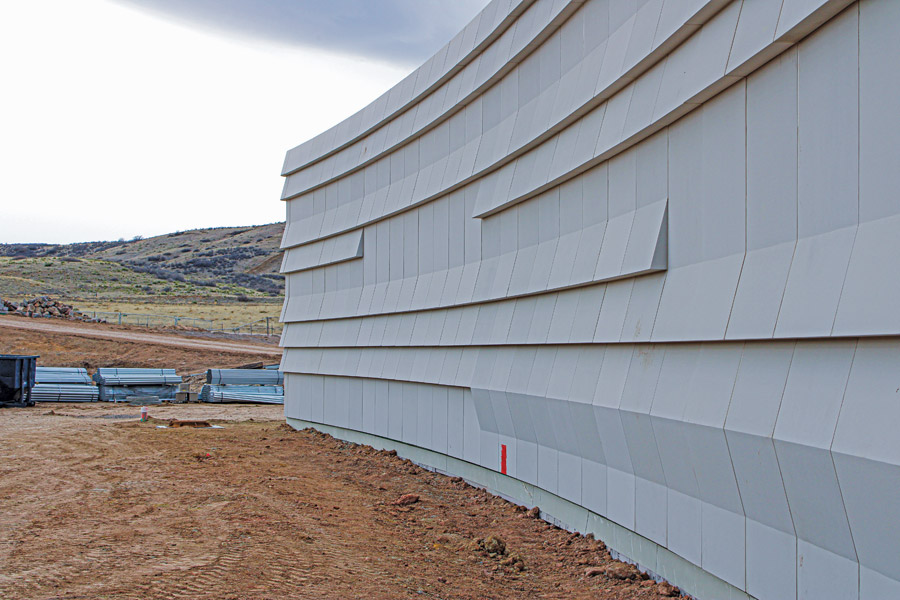
The foundations of modern construction began to be laid in the 1960s and 1970s. Since steel reinforcements could not be shaped to meet flexibility and aesthetic requirements, architects and those with an aptitude for this field began searching for a new material and discovered glass reinforced concrete (GFRC). Because GFRC is extremely strong, lightweight, and flexible, it continues to play a significant role in the construction of exterior facades today.
What Is Glass Reinforced Concrete?
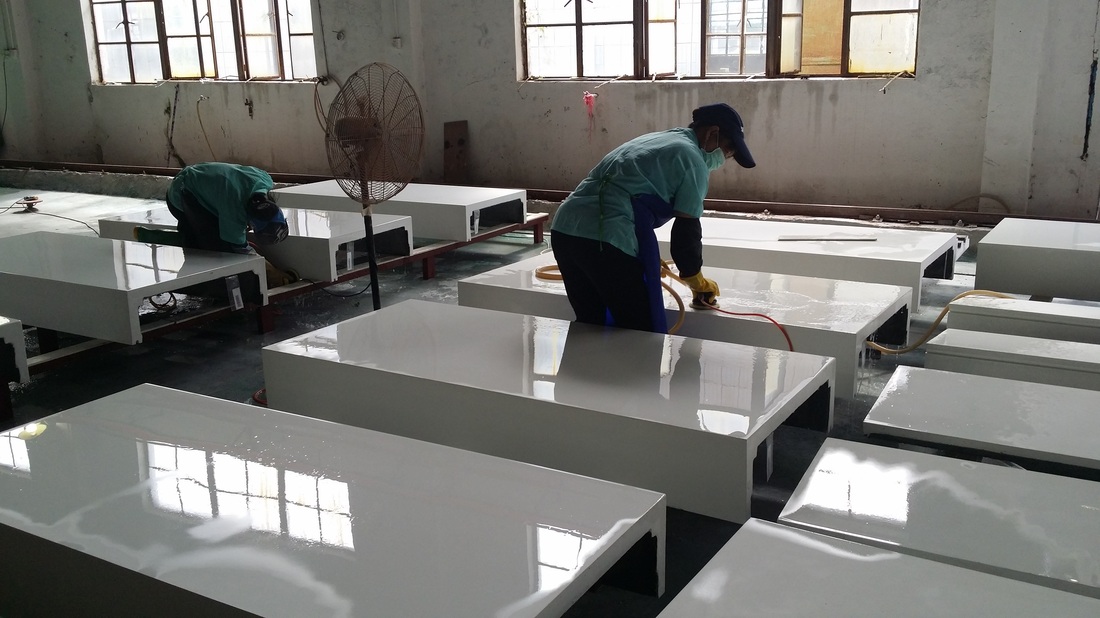
GFRC is a composite material reinforced with alkali-resistant glass fiber strands. A GFRC panel consists of a steel frame covered with glass fiber-reinforced concrete. This combination makes the panel both lightweight and strong, offering a wide range of applications in precast architectural projects.
What Materials Are Inside GFRC Panels?
Cement: High-quality Portland cement serves as the binder.
Sand: Fine aggregate ensures a smooth surface.
Glass Fiber: AR glass fibers provide resistance to tensile forces.
Polymer Additives: These increase the material’s flexibility and protect against cracking.
Steel Frame: It forms the panel’s load-bearing skeleton and provides structural support.
Benefits of GFRC Panels for Exterior and Interior Facades
Flexibility That Adapts to Any Outfit
It is quite difficult to give concrete a specific geometric shape using steel reinforcement. Even if a shape is achieved, the weight becomes too great. With GFRC panels, however, complex geometric shapes can be easily created using molds. This achieves the aesthetic appearance desired by architects. They are also lighter.
The Long Service Life and Low Maintenance Benefits of GFRC
Thanks to their very low porosity and the fact that they contain no iron, GFRC panels do not rust or crack even if they absorb moisture. As a result, they require no repairs for a very long time.
Lighter Than Steel, Stronger Than Concrete
GFRC panels are lightweight because they contain no steel reinforcement and are cast in thin forms. However, don’t let that worry you when it comes to strength they are stronger than concrete.
Fast and Convenient
GFRC panels are mass-produced at a location separate from the construction site. Since the molds are standardized, hundreds or even thousands can be produced very quickly. As a result, they require only transportation and installation.
Why Don’t We See GFRC Panels Everywhere?
People who use GFRC panels for exterior or interior applications generally prefer historic sites, very luxurious buildings, or museums. Like me, you probably haven’t seen anyone in an ordinary city who has given their home’s exterior a futuristic look with geometric shapes using GRC or GFRC panels. Actually, we need to understand this: As I mentioned earlier, GFRC is a material designed for the future. You’ve probably seen buildings or houses in some fantasy or science fiction movies. GFRC is actually showing us exactly that. Right now, perhaps because of the price, or maybe because the look doesn’t appeal to others, it might not seem attractive. However, there’s no escaping the future. GFRC panels will definitely be used in all homes.

Emma Clarke is an architect with a background in building materials and facade engineering. She has worked on GRC projects in various climates and specializes in material performance and restoration.