
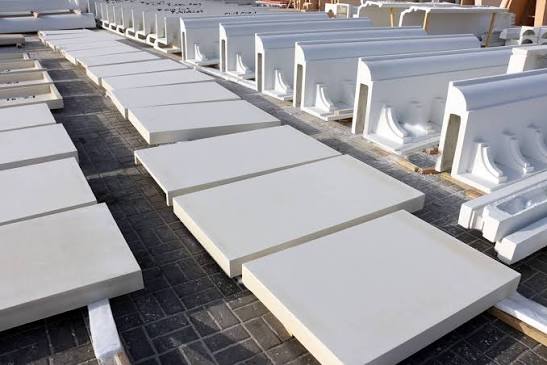
GRC cladding is the final layer of a building’s interior or exterior facade. Architects frequently opt for GRC cladding these days. People seeing GRC cladding for the first time are surprised by how aesthetically pleasing it looks. In fact, it has been used as a construction material for 50 years, but since glass reinforced concrete is considered the architectural material of the future, it’s perfectly normal for people to be surprised by it now. I should note that we will see GRC cladding frequently in projects undertaken by architects, as it is far more functional than traditional concrete in many ways. Thanks to its elasticity, which allows for the creation of a wide variety of geometric shapes, architects with vivid imaginations can create even more unique designs using GRC.
How Are GRC Exterior Cladding Panels Installed?
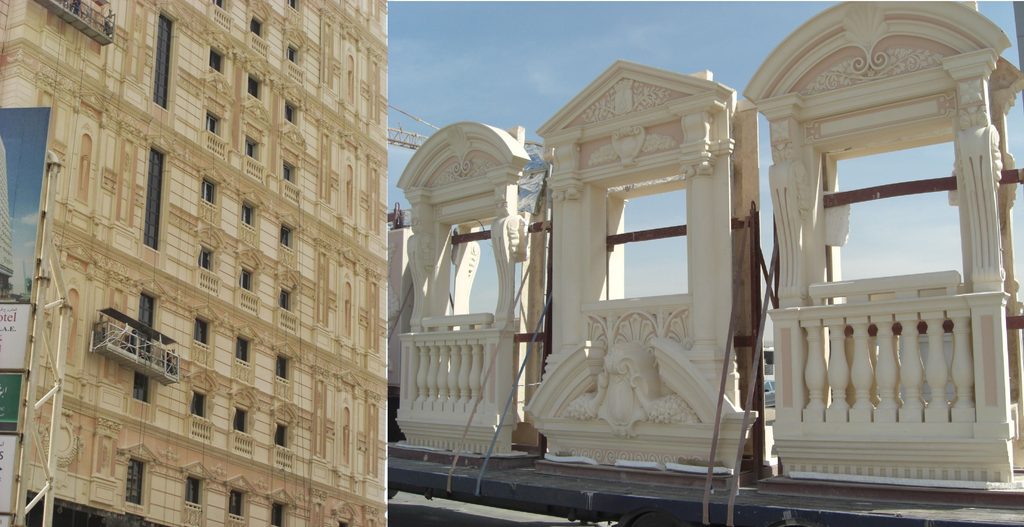
It is not possible to give a short answer to a question like this. Since projects and designs vary, the answer may differ for each project. However, there are some common points in projects involving GFRC. First, your design must be approved by the architect. You must ensure that the GFRC panel you produce has successfully passed certain tests. Before doing so, you can create a prototype and conduct tests on it.
Lifting Systems for GRC Panels
Because GFRC panels are thin, they can be fragile before they are secured to the building. Damage to the connection points during panel removal may later require that part to be replaced. Therefore, the first step is to select a lifting system for your GFRC panels based on your design. You can see the types of lifting systems in the subheadings below. You can choose the one that is suitable for your project.
Cranes
While tower cranes are preferred for high-rise buildings, mobile cranes are preferred for low-rise buildings. In addition, the weight of the GFRC panels, as well as project and construction site logistics, are also very important.
Vacuum Lifters
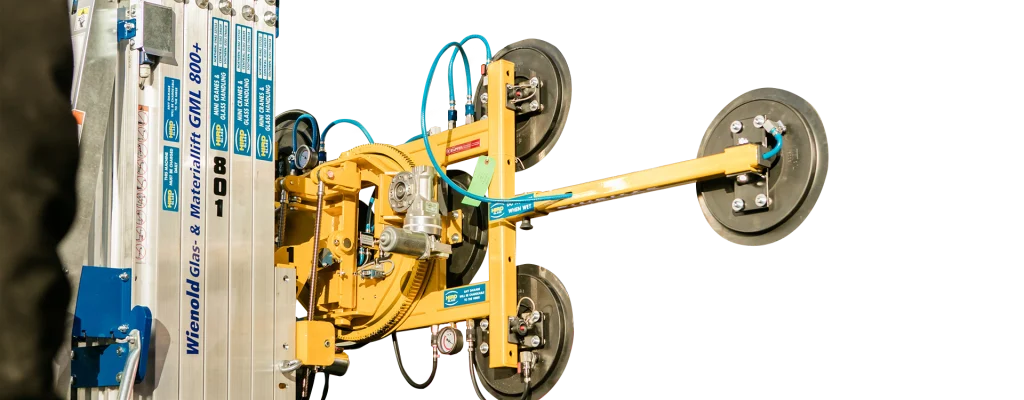
Vacuum lifters work on smooth, flat surfaces and produce excellent results. Multiple suction cups adhere to the surface of the GFRC panel, allowing it to be installed on the building without damaging the connection points.
Mechanical Lifts and Hoists
Mechanical clamps and hangers provide a reliable solution for panels equipped with lifting anchors. Nylon or polyester hangers distribute the load without scratching the surfaces. Balance bars prevent the hangers from pressing against the panel edges, which could cause breakage.
Custom Lifting Frames
Large or complex panels typically require frames designed specifically for the project. These frames support the panel across its entire width, minimizing bending stress. They also allow for precise rotation and positioning during installation.
You can view the entire range of these lifting systems at https://hird.co.uk/.

Emma Clarke is an architect with a background in building materials and facade engineering. She has worked on GRC projects in various climates and specializes in material performance and restoration.
2 thoughts on “An Overview of GRC Cladding Installation”