

Glass reinforced concrete, commonly known as GRC, is a composite material in which alkali-resistant glass fibers are used in place of the steel reinforcement typically found in conventional concrete.
The glass fibers are dispersed into a cement-rich mold either by spraying or mixing. This allows the material to take the shape of the mold, and depending on the mold’s specifications, lightweight GFRC panels with a diameter of 10–15 mm can be produced.
When flexibility, lightness, and durability are combined, the result is glass fiber-reinforced concrete. It is used in architecture as a new approach to eliminate the weight of conventional steel reinforcement and to save on other building and construction costs.
It was first used worldwide between the 1960s and 1970s. It has been used in the restoration of many historic sites, in building facade cladding, and in the renovation of public buildings. If standard conditions are maintained, it can last for more than 50 years.
Freeze-Thaw Performance of Glass Reinforced Concrete
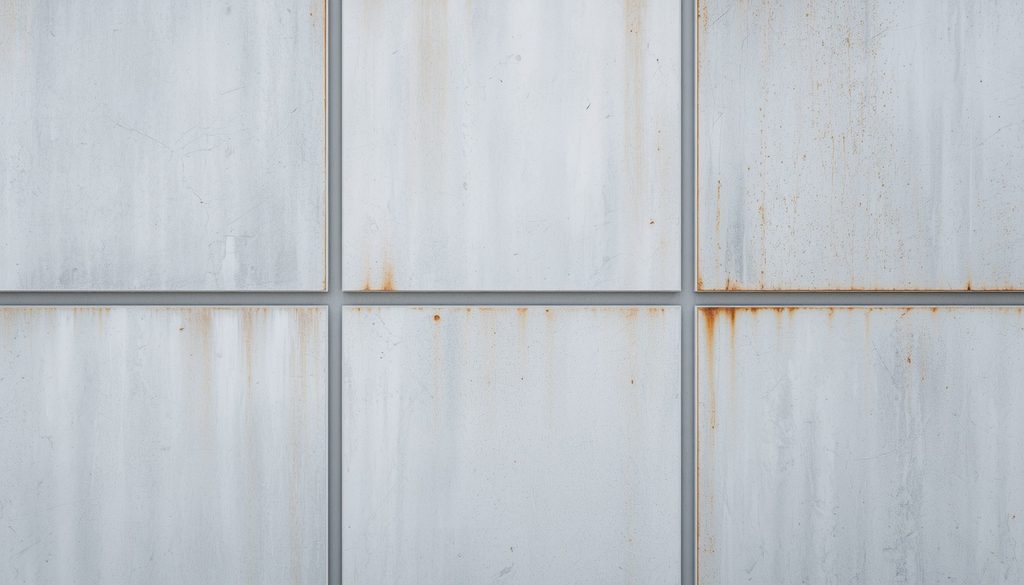
If you walk past a 40 year old building with a facade made of GFRC panels, I’d like you to take a close look at the panels. That’s because you won’t see any issues such as rust stains, spalling, cracking, or peeling of the coating. You’ll find them just as sturdy as the day they were installed, with none of the problems I just mentioned. We can also add that GFRc panels are long-lasting. If ordinary concrete had been used for this exterior application, you would definitely have seen signs of cracking.
Why Is GFRC More Durable?
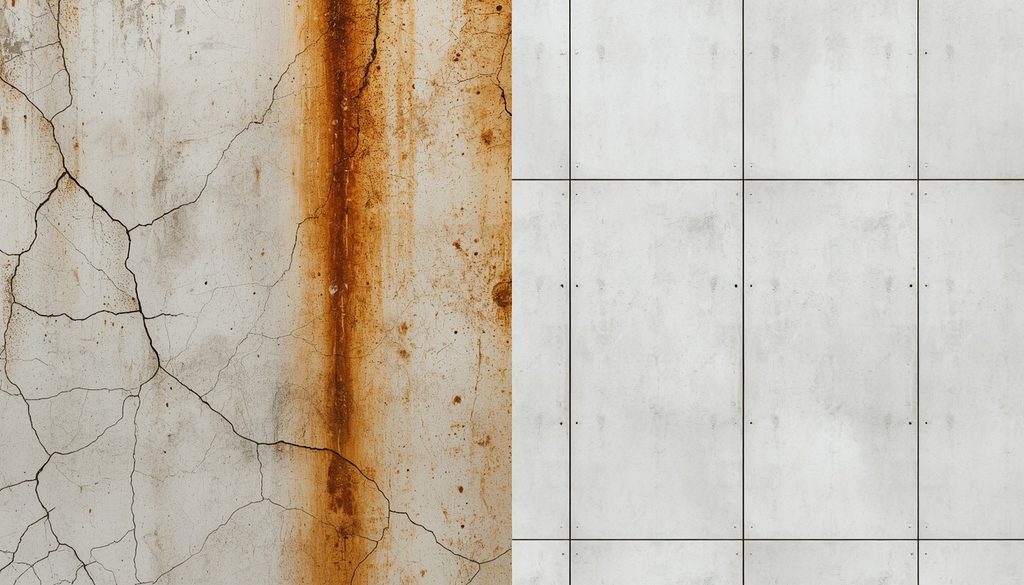
To understand the strength of glass reinforced concrete, we need to clearly understand the difference between it and ordinary cast-in-place concrete. Some of the most common problems encountered in concrete used in steel-reinforced exterior walls include:
- Cracking
- Spalling
- Staining
- Rusting of steel reinforcement
Moisture and carbonation cause the most damage to concrete. Since concrete absorbs moisture, the steel reinforcement inside begins to rust. The iron oxide products released during this process cause the concrete to crack gradually. This must be stopped very quickly; otherwise, it can spread to the entire exterior facade.
In glass-fiber-reinforced concrete, however, there is never any rusting because it does not contain steel reinforcement. Since fine glass-fiber strands are mixed in instead of steel reinforcement, there is no risk of rusting, and there is no volumetric expansion.
Dense and Durable Matrix: The Core Strength of GFRC
The main reason GFRC has such excellent durability is that it contains virtually no pores. When there are no voids, deterioration becomes nearly impossible. So, what is required to completely eliminate these voids? The answer depends on the amount of water in the mixture.
In most standard concrete and precast concrete production, the water-to-cement ratio is high. However, in GFRC panel production, the ratio is 0.35 a ratio far below the norm. With this low water-to-cement ratio, a composite material resembling a cement paste is obtained, which is much denser and contains very few pores. As a result, rain and other water sources hitting the exterior facade cannot cause moisture buildup.
How GFRC Surfaces Withstand UV Exposure
GFRC panels, which are typically used on exterior facades, are most exposed to ultraviolet radiation. It’s natural for all of us to wonder: “Do UV rays damage concrete?” or “Won’t the colors fade?”
Since GFRC contains no plastic, paint, or organic binding agents, UV rays can never cause damage. This has been confirmed by tests. No problems have been observed in GFRC panels exposed to UV rays over long periods of time.

Emma Clarke is an architect with a background in building materials and facade engineering. She has worked on GRC projects in various climates and specializes in material performance and restoration.
1 thought on “What Is Glass Reinforced Concrete? A Guide for Architects”